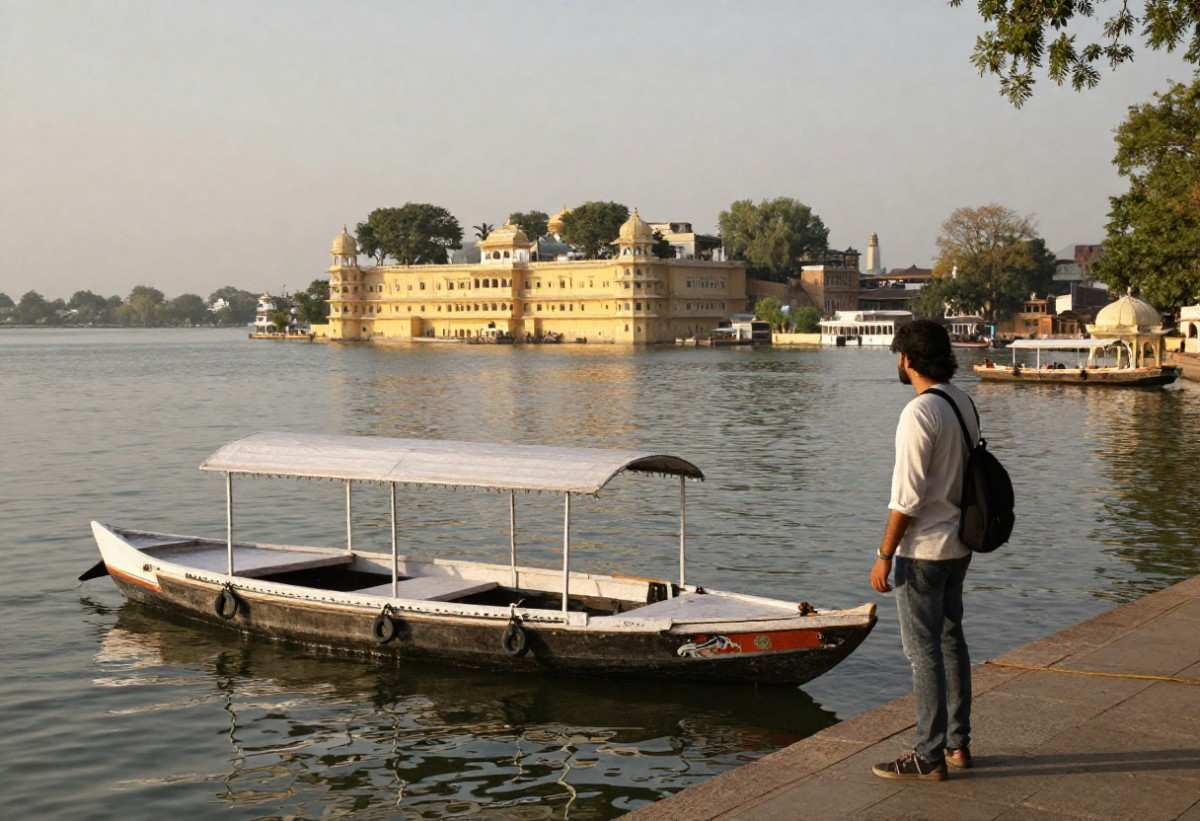
Udaipur is one of the few Indian cities that looks exactly like its photographs. The palaces are real, the lakes are that colour, and the sunsets do stop you mid-sentence. What nobody mentions is the card that gets declined at the bazaar, the rickshaw driver quoting ten times the local rate, and the sites that reward preparation far more than spontaneity.
The places worth prioritising, the season worth choosing, the things worth doing, and the payment setup that covers every corner of this city without friction.
Key highlights
- Udaipur was founded in 1559 by Maharana Udai Singh II and served as the capital of the Mewar kingdom. It sits in southern Rajasthan surrounded by the Aravalli Hills and five lakes.
- The City Palace is the largest royal complex in Rajasthan. Indians: Rs 300 (approx $3); foreign travellers: Rs 600 (approx $6).
- A sunset boat ride on Lake Pichola costs Rs 400 (approx. $4) to Rs 700 ($7) per person and is the single most iconic experience in Udaipur.
- October to March is the best window for foreign tourists. Peak season is December and January, when accommodation prices rise 30% to 50%.
- Most restaurants, larger shops, and tourist sites in Udaipur accept UPI QR payments. Local bazaars and rickshaws are often cash-first.
- Foreign tourists can use CheqUPI, an RBI-licensed UPI wallet, to pay at merchants across Udaipur without needing an Indian bank account.
Why Udaipur belongs on every first-timer’s India itinerary
Udaipur is unlike most Indian cities in one important way: it is genuinely beautiful at ground level. Founded in 1559 by Maharana Udai Singh II as the new capital of the Mewar kingdom, the city was built around five lakes and the natural shelter of the Aravalli Hills. The result is a cityscape where marble palaces rise from water, hilltop forts catch the evening light, and narrow lanes of the old city open suddenly onto lake views that stop you mid-step.
It is not a city for ticking off monuments quickly. The pace here is slower than Delhi or Jaipur, and that is the point. First-timers who give Udaipur two to three days rather than rushing through in one leave with a completely different experience of Rajasthan.
Top places to visit in Udaipur
City Palace
The City Palace is Udaipur’s defining landmark, a sprawling complex of palaces, courtyards, towers, and gardens built over four centuries by successive Mewar rulers. It sits on the eastern shore of Lake Pichola and dominates the skyline from almost every angle in the old city. Entry costs Rs 300 (approx $3) for Indians and Rs 600 (approx $6) for foreign nationals. Plan at least two hours inside. The Mor Chowk (Peacock Courtyard) with its glass mosaic peacocks is the visual highlight.
Lake Pichola and the sunset boat ride
Lake Pichola is the heart of Udaipur. The lake holds two island palaces, Jag Mandir and the now-hotel Lake Palace, both visible from the shore and reachable by boat. The sunset boat ride, departing from Rameshwar Ghat or Gangaur Ghat, costs Rs 400 (approx $4) to Rs 700 (approx $7) per person and runs for about 45 minutes. Book your ticket at the ghat counter by 5 PM during peak season. It sells out.
Jagdish Temple
A five-minute walk from the City Palace entrance, Jagdish Temple is a 17th-century Indo-Aryan-style temple dedicated to Lord Vishnu. Entry is free and open to all visitors. Remove shoes before entering and dress modestly. It is most atmospheric in the early morning and in the evening, with aarti around 7 PM.
Bagore Ki Haveli
Bagore Ki Haveli is an 18th-century lakeside mansion on Gangaur Ghat that now operates as a museum and cultural centre. The evening folk dance show at 7 PM runs for one hour and costs Rs 90 ($0.95) per person for Indians and Rs 150 (approx $1.60) per person for foreign nationals. It is one of the best introductions to Rajasthani music, puppet shows, and dance that Udaipur offers. Book in advance during peak season.
Fateh Sagar Lake and Nehru Island
Fateh Sagar Lake sits north of the old city and offers a quieter, less crowded alternative to Lake Pichola. A boat ride to Nehru Island in the centre of the lake costs Rs 118 (approx $1.25) per person, including the return trip. The lake promenade at sunset is a favourite with locals and far less touristy than the Pichola ghats.
Sajjangarh (Monsoon Palace)
Sajjangarh sits on a hilltop 5 km from the city centre at 944 metres above sea level. Entry costs Rs 120 (approx $1.3) for Indians and Rs 500 (approx $5.3) for foreign nationals. The views over the lakes, city, and surrounding hills are the best in Udaipur. Go an hour before sunset. The road up is steep and best covered by taxi or autorickshaw rather than on foot.
Best things to do in Udaipur for first-timers
Sunset boat ride on Lake Pichola
Already covered under places, but worth repeating as a standalone activity. This is the one thing every first-timer should do on their first evening. Nothing orients you to Udaipur faster than seeing the City Palace, the hills, and the island palaces from the water at golden hour.
Rajasthani folk dance at Bagore Ki Haveli
The 7 PM cultural show at Bagore Ki Haveli gives a concentrated hour of Rajasthani performing arts in a genuinely historic setting. It is not a tourist-park performance. The haveli itself is worth exploring before the show starts.
Shopping in Hathipole and Bada Bazaar
Udaipur’s main bazaars run along Hathipole and into Bada Bazaar in the old city. Pichwai paintings, miniature art, silver jewellery, juttis (traditional shoes), and Rajasthani textiles are the main draws. Prices are negotiable. Carry cash for smaller stalls; larger fixed-price shops often accept UPI or card.
Day trip to Kumbhalgarh Fort
Kumbhalgarh, 80 km from Udaipur, holds one of the longest fort walls in the world at 36 km, second only to the Great Wall of China. A full-day trip by taxi costs Rs 1,500 (approx $16) to Rs 2,500 (approx $27), depending on the vehicle. Combine it with a stop at Ranakpur Jain Temple on the same route for a full day out of the city.
Best time to visit Udaipur
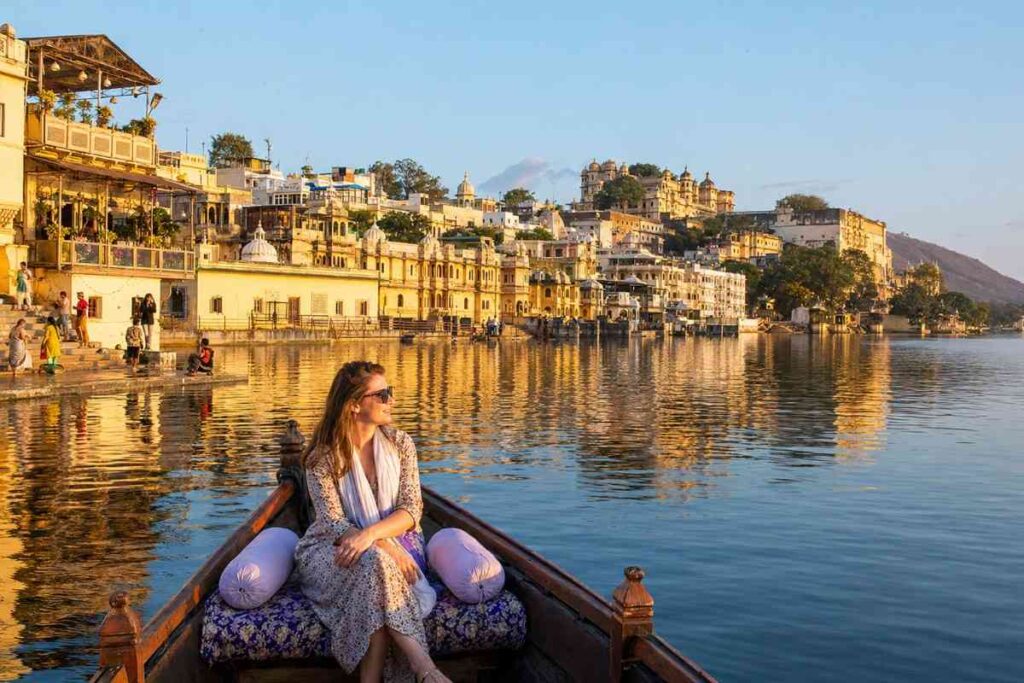
October to March is the best window for foreign tourists. Daytime temperatures sit between 15 and 28 degrees Celsius, skies are clear, and all major attractions and boat rides operate at full capacity.
November to February is the peak season. Accommodation prices rise 30% to 50% above standard rates, and popular hotels book out weeks in advance. Book two to three months ahead for December and January visits.
March and October are shoulder months with very similar weather, lower prices, and easier availability.
April to June is hot, with temperatures regularly reaching 38 to 45 degrees Celsius. Not recommended for first-timers unless you are comfortable in extreme heat and can access air-conditioned accommodation throughout the day.
July to September are monsoons. The lakes fill dramatically, and the landscape turns green, which some travellers find beautiful. Boat rides on Lake Pichola may be limited during heavy rain periods.
How to get to and around Udaipur
Getting to Udaipur
Maharana Pratap Airport (UDR) sits 22 km from the city centre and receives regular flights from Delhi, Mumbai, Jaipur, Hyderabad, and Bengaluru. A prepaid taxi from the airport to the old city costs Rs 500 (approx $5) to Rs 800 (approx $8) and takes around 30 to 40 minutes.
By train, Udaipur City Railway Station connects to Delhi, Jaipur, Mumbai, and Ahmedabad. Journey times from Delhi run 12 to 18 hours depending on the service. Book train tickets well in advance on IRCTC, which has a foreign tourist quota available.
Getting around the city
Most major attractions in the old city sit within walking distance of each other. For longer distances to Fateh Sagar Lake, Sajjangarh, or Shilpgram, use Ola or a pre-agreed auto-rickshaw. The Ola app avoids the need to negotiate fares on the spot, which is where most foreign tourists overpay. Shared autos run fixed routes at very low cost for confident budget travellers.
How to pay in Udaipur as a foreign tourist
Udaipur has a genuinely mixed payment landscape, and understanding it before you arrive saves repeated frustration.
Where UPI and cards work in Udaipur
Rooftop restaurants, larger guesthouses and hotels, heritage site ticket counters, Ola rides, and mid-sized retail shops in the old city accept UPI QR payments widely. The City Palace ticket counter, Bagore Ki Haveli, and most sit-down restaurants catering to tourists take both card and UPI. International Visa and Mastercard work at most of these places, but check for the OTP barrier at smaller merchant terminals.
Where cash is still needed
Local bazaar stalls in Hathipole and Bada Bazaar, auto-rickshaw drivers who are not on Ola, small dhaba-style food stalls, ghat boat operators, and temple donation boxes are cash-first or cash-only. Carry Rs 5,000 (approx $52.49) to Rs 10,000 (approx $104.99) in small notes for daily market and transport use. ATMs are available near the City Palace area and at major banks across the city.
How CheqUPI works for foreign tourists
CheqUPI is an RBI-licensed prepaid payment instrument built specifically for foreign tourists and NRIs. You load it using your international credit or debit card, receive a UPI ID, and pay at any QR-code merchant in Udaipur by scanning and confirming. No Indian bank account needed. The loading fee is 2.95% + applicable taxes for all foreign users. Every merchant payment after that costs zero. CheqUPI is free to join for tourists from 180+ FATF-compliant countries. For a complete guide on setting up and using a UPI wallet in India, see our complete UPI guide.
Udaipur travel tips for first-timers
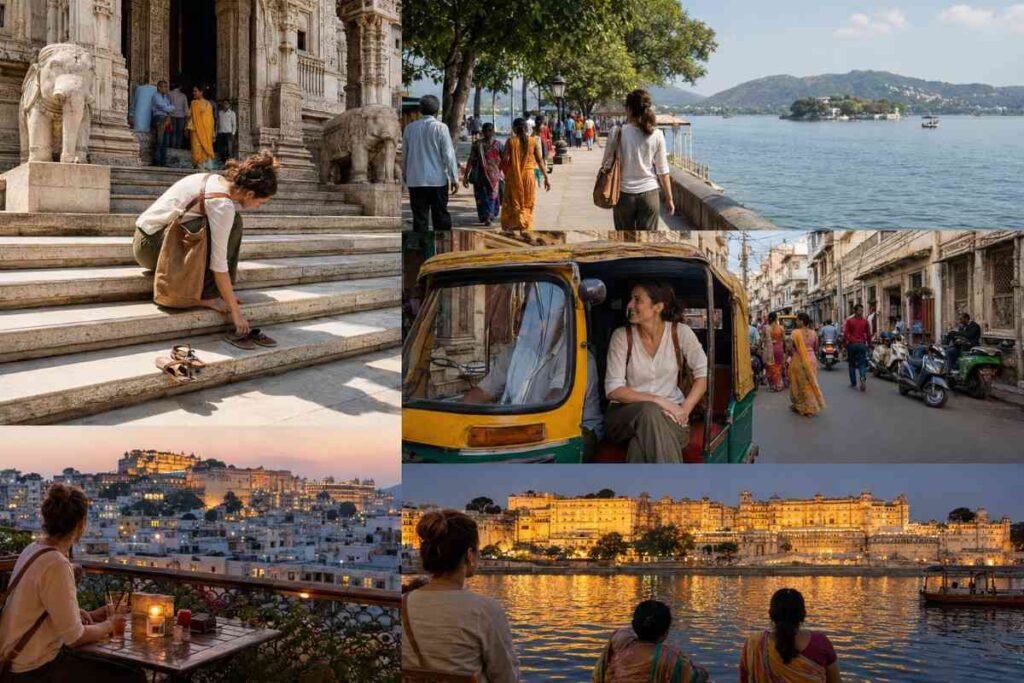
Give yourself at least two full days. One day covers the City Palace and Lake Pichola. The second day handles Fateh Sagar, Bagore Ki Haveli, and the bazaars. Two days is the minimum; three is better.
Book the sunset boat ride early. Walk to Rameshwar Ghat or Gangaur Ghat by 4:30 PM during peak season. Tickets sell out, and there is no online booking system.
Dress modestly at Jagdish Temple and all religious sites. Shoulders and knees covered is the standard. Scarves are available at the entrance for Rs 20 (approx $0.20) to Rs 50 (approx $0.50) if needed.
Negotiate rickshaw fares before you get in, or use Ola. The starting offer for a foreign tourist at most ghats is three to five times the local rate. Ola prices are fixed and reliable.
Always choose INR at ATMs. Dynamic Currency Conversion, where the machine offers to charge you in your home currency, always gives a worse rate. Select INR every time.
Conclusion
Udaipur rewards first-timers who arrive with a little preparation and at least two days to spend. The lakes and palaces are as good as the photographs suggest. The old city lanes, the rooftop restaurants, and the evening folk shows are what make it stay with you. Sort your payments before you arrive, carry a small cash reserve for the bazaars, and set up a UPI wallet so the rest of the city is open to you from the moment you land.
FAQs
1.What is the best time to visit Udaipur for first-timers?
October to March. Comfortable temperatures, clear skies, and all attractions fully operational make this the ideal window. Peak season is December and January, with higher accommodation prices.
2.What are the top tourist places in Udaipur?
City Palace, Lake Pichola, Jagdish Temple, Bagore Ki Haveli, Fateh Sagar Lake, and Sajjangarh (Monsoon Palace) are the essential first-timer sites.
3.How many days do I need in Udaipur?
Two to three days cover the main attractions comfortably. One day is possible but rushed. Three days allow for a day trip to Kumbhalgarh Fort as well.
4.Is Udaipur safe for foreign tourists?
Yes. Udaipur is one of the safest cities in Rajasthan for foreign tourists, including solo women. Standard precautions apply at night and in crowded market areas.
5.How do foreign tourists pay in Udaipur?
Use a UPI wallet like CheqUPI for restaurants, shops, and tourist sites. Carry Rs 5,000 (approx $53) to Rs 10,000 (approx $106) cash for local bazaars, rickshaws, and ghat boat operators.
6.How do I reach Udaipur from Delhi?
By air, it is a 1.5-hour flight to Maharana Pratap Airport. By train, overnight services from Delhi take 12 to 18 hours. The road from Delhi is around 670 km.
7.Can foreign tourists use UPI in Udaipur?
Yes. Through an RBI-licensed UPI wallet like CheqUPI, foreign tourists can pay at any QR-code merchant in Udaipur without an Indian bank account.
8.What should I eat in Udaipur?
Dal baati churma, gatte ki sabzi, and Rajasthani thali are the must-try dishes. Rooftop restaurants around Lake Pichola serve both local and international food with lake views.
9.What is the entry fee for foreign tourists at the City Palace, Udaipur?
Entry costs Rs 300 (approx $3) for Indians and Rs 600 (approx $6) for foreign nationals. The museum inside is included in the entry fee. Plan at least two hours for the full complex.
10.How do I get cashless payments in Udaipur as a foreign tourist?
Download CheqUPI before your trip, load it using your international card, and use it to scan and pay at UPI-enabled merchants across Udaipur. The loading fee is 2.95% + applicable taxes for all foreign users.
“Udaipur’s bazaars, rooftop restaurants, and heritage sites should be the highlight of your trip, not the place where your card gets declined. One UPI wallet loaded before you land changes that entirely. Download CheqUPI. Activate your wallet after arriving in India and start paying with UPI in minutes.”