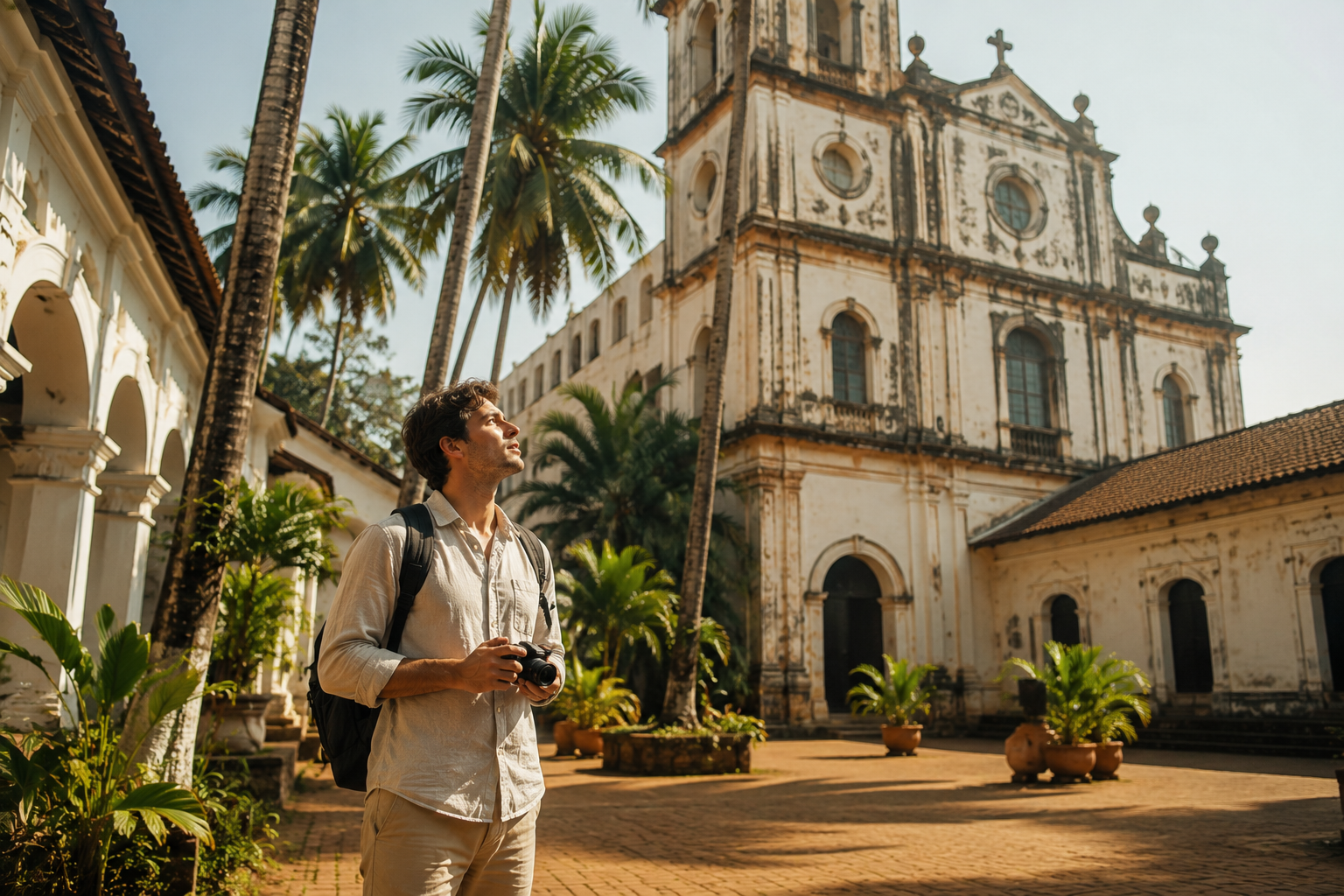
Most people who visit Goa spend five days within walking distance of the ocean and leave thinking they have seen the place. They have not. The Goa that actually stays with you is inland. It is a 16th-century church complex so well preserved that UNESCO stepped in to protect it. It is a waterfall dropping 310 metres through rainforest so thick you forget you are in the same state as the beach bars. It is a five-rupee ferry ride to an island where the houses have barely changed since the 1950s and the only sound is a church bell.
None of it is difficult to reach, and none of it is expensive. What catches most foreign tourists off guard is not the logistics but the payments. Inland Goa runs on UPI QR codes, your foreign card will not work at them, and the jeep operator at Dudhsagar does not have an ATM anywhere near his parking spot. Everything below covers what to visit, what it costs, and how to have payments sorted before you leave the hotel.
Key Highlights
- The Basilica of Bom Jesus in Old Goa is a UNESCO World Heritage Site and one of the oldest churches in Asia
- Dudhsagar Falls drops 310 metres through the Western Ghats rainforest and is one of India’s tallest waterfalls
- Sahakari Spice Farm runs guided tours through nutmeg, cinnamon, cloves, and pepper, ending with a traditional Goan meal
- Fontainhas in Panjim is Goa’s Latin Quarter, a neighbourhood of Indo-Portuguese painted houses, local bakeries, and quiet chapels
- UPI is the dominant payment method across Goa. Your foreign card will not work at QR codes without a prepaid wallet
- There is no joining fee for most nationalities. CheqUPI charges 2.95% to load. Merchant payments are free
When to Visit Goa
Goa is at its best from November to February. The weather is dry, cool, and comfortable, and most beach shacks and tourist services run at full capacity. If you want to avoid the largest crowds while still having good weather, October and March are solid alternatives that offer similar conditions with fewer people around.
Avoid June through September if you are planning beach activities. Many beach shacks shut down during the monsoon, sea conditions get too rough for swimming, and some inland roads become difficult. That said, Dudhsagar Falls is at its most spectacular during monsoon if you are specifically visiting for that.
Understanding the Local Vibe
Goa has developed distinct pockets with strong international community atmospheres over the years. The Candolim area and parts of South Goa have long been popular with British travellers, with familiar food options and a relaxed social culture that feels easy to settle into.
The northern beach towns of Mandrem, Ashwem, and Arambol have a strong following within the Russian-speaking community. You will notice this in the menus, signage, and cultural activities across these areas. For Russian tourists specifically, CheqUPI charges a one-time joining fee of Rs 999 (around $12). For all other nationalities, the wallet is free to set up, with only a 2.95% loading fee applying.
Old Goa: The City That Came Before the Beaches
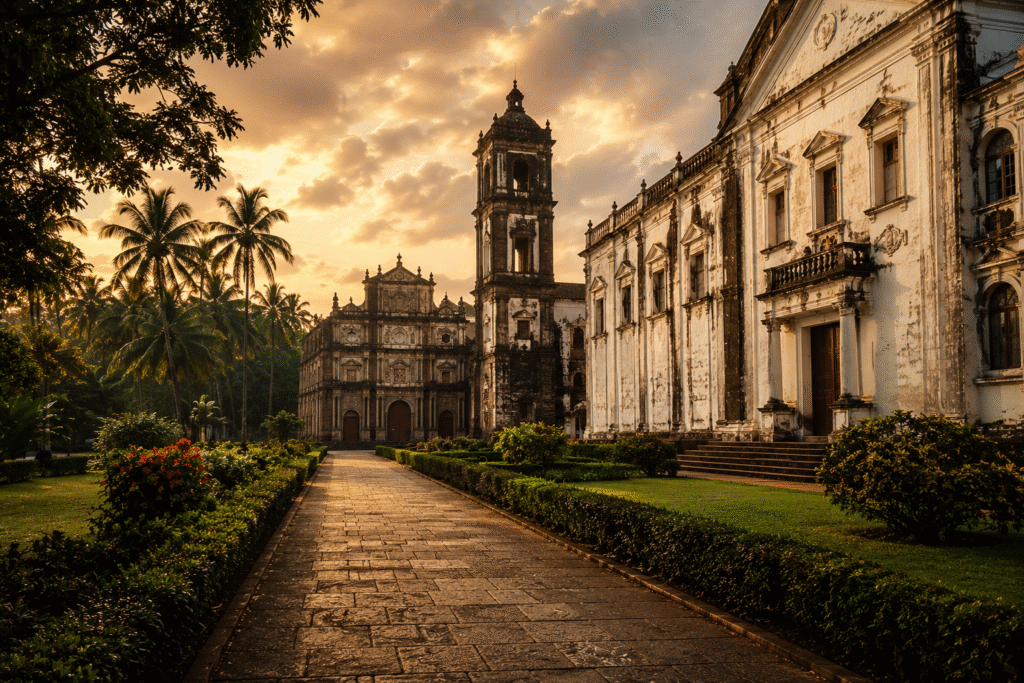
Old Goa is the original Portuguese capital of India, built in the 16th century and abandoned when plague emptied it two hundred years later. The Basilica of Bom Jesus houses the remains of St. Francis Xavier and is one of the oldest churches in Asia. The Se Cathedral next door is one of the largest churches on the continent. Entry to all Old Goa churches is free.
It sits 9km east of Panaji, roughly 20 minutes by taxi. Dress modestly when entering. Go on a weekday morning to avoid tour bus crowds.
Getting There
Taxi from Panaji: Rs 200 to 300 ($2.50 to $3.50) one way. Auto-rickshaw: Rs 100 to 150. Most drivers accept UPI. Carry Rs 200 in cash for smaller vehicles and vendors near the complex.
Charges may vary. Check current rates with your driver before you travel.
Fontainhas: Goa’s Latin Quarter
Fontainhas is lined with Indo-Portuguese homes in warm yellows, blues, and terracotta, with tiled roofs and ornate balconies. Beyond the architecture, it is about everyday life: local bakeries, quiet chapels, and neighbourhood taverns still following age-old rhythms.
It is a 10-minute walk from Panaji’s main market and free to explore on your own. Eat a beef chilli roll from a bakery counter and sit in one of the small cafes facing the river. Guided heritage walks run for Rs 500 to 800 ($6 to $10) per person and last around 90 minutes. Most operators accept UPI.
Dudhsagar Falls: Goa’s Most Dramatic Natural Sight
Dudhsagar plunges in four tiers through the Western Ghats. At its most powerful during monsoon, it thunders through thick rainforest, dwarfing the trains that cross the nearby viaduct. Access varies seasonally, and during heavy rains, entry is often only possible with authorized 4WD vehicles.
From Panaji, take a train to Kulem or Castle Rock, then hire a jeep for the 12km off-road journey through Bhagwan Mahaveer Sanctuary. Full-day tour packages from Panaji cost Rs 1,200 to 1,800 ($14 to $22) per person, including transport and a meal. Smaller jeep operators in Kulem mostly work in cash. Carry Rs 500 to 1,000 ($6 to $12) for the day. Best visited from July to November.
Spice Plantations: Goa’s Green Interior
A visit to a spice plantation offers a window into the ingredients that define Goan cooking. At Sahakari, guided walks introduce nutmeg, cinnamon, cloves, and pepper growing beneath towering areca palms. The tour ends with a traditional Goan meal.
Most plantations are around Ponda, 30km from Panaji. Tours with lunch cost Rs 600 to 1,000 ($7 to $12) per person. Taxi round trip from Panaji: Rs 800 to 1,200 ($10 to $14). Larger farms like Sahakari and Tropical Spice accept UPI. Carry Rs 200 cash as a backup for smaller operators.
Divar Island: A Ferry Ride Back in Time
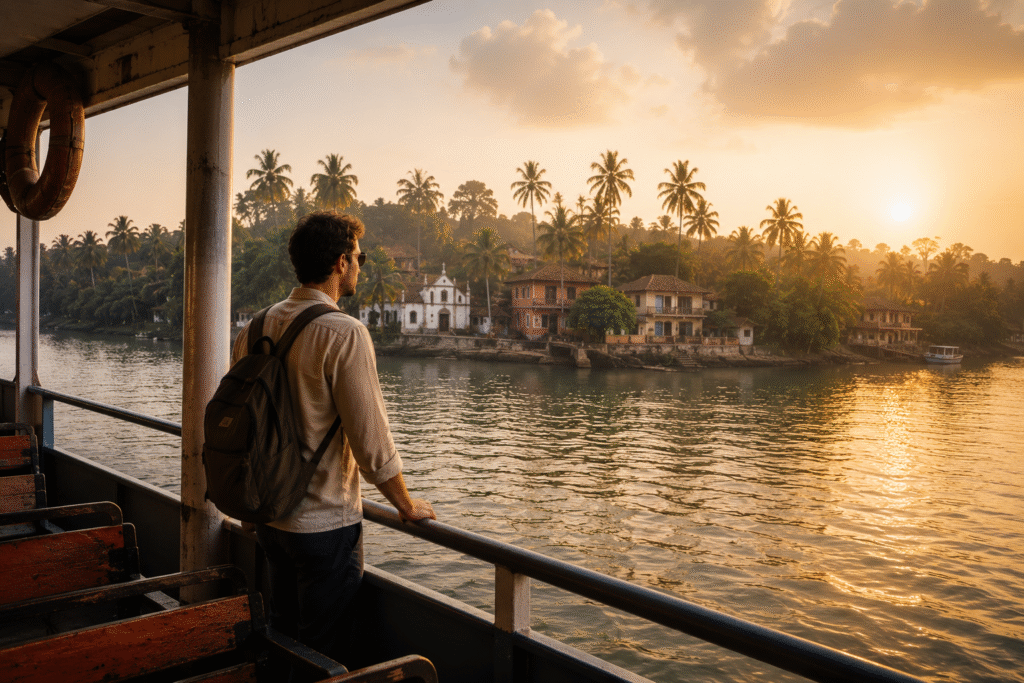
Divar Island offers traditional village life accessed by ferry from Panaji. The ferry runs every 30 minutes, costs Rs 5, and takes 4 minutes. On the island you find white-painted churches, quiet lanes, and houses with carved stone balconies unchanged since the 1950s.
There is almost nothing commercial here. One or two small cafes, a church, and a view of the Mandowi River most tourists never see. The ferry and the island are almost entirely cash-based. Carry Rs 200 to 300 ($2.50 to $3.50) for the visit.
How to Pay Across Inland Goa
UPI is the dominant payment method throughout Goa, including at tour operators, cafes, and spice farms. Your foreign Visa or Mastercard will not work with UPI QR codes directly. You need a prepaid UPI wallet. Read our full guide on how foreign tourists use UPI in India to set one up before you land.
Cash vs UPI Across Goa’s Inland Stops
| Location | UPI accepted | Cash to carry |
| Old Goa churches | Taxis accept UPI. Entry free | Rs 200 for autos and vendors |
| Fontainhas cafes | Most accept UPI | Rs 100 to 200 for street food |
| Dudhsagar jeep operators | Some accept UPI | Rs 500 to 1,000 recommended |
| Spice plantations | Most larger farms accept UPI | Rs 200 for tips |
| Divar Island | Cash only | Rs 200 to 300 for the visit |
Cash acceptance varies by vendor. Carry Rs 500 to 1,000 ($6 to $12) on any day trip outside Panaji. Check chequpi.com/faqs for current wallet details.
There is no joining fee for most nationalities. CheqUPI charges 2.95% per load with zero transaction fees at merchants. You do not need to find a branch while on holiday. CheqUPI offers doorstep verification via WhatsApp booking directly at your Goan hotel or villa. Use our India travel budget guide to plan how much to load before arrival. Any unused wallet balance is automatically refunded to your international card upon account closure or visa expiry.
Budget for Goa Beyond the Beaches
Inland Goa is very affordable. The churches are free, the Divar ferry costs Rs 5, and a spice tour with lunch runs under $15.
| Day trip | Cost per person (INR) | Cost per person (USD approx) |
| Old Goa churches and taxi | Rs 400 to 600 | $5 to $7 |
| Fontainhas walk and cafe lunch | Rs 600 to 1,000 | $7 to $12 |
| Dudhsagar Falls full-day tour | Rs 1,200 to 1,800 | $14 to $22 |
| Spice plantation tour and lunch | Rs 800 to 1,200 | $10 to $14 |
| Divar Island half-day | Rs 200 to 400 | $2.50 to $5 |
Prices are estimates for June 2026. Dudhsagar rates vary by season. Confirm costs with your operator the day before. USD conversions are approximate at Rs 83 to $1.
Is Goa Safe for Foreign Tourists?
Goa is one of India’s most tourist-friendly states. National ride-hailing apps like Ola and Uber do not operate in Goa due to local regulations. The go-to alternative is GoaMiles, the local government-approved taxi-hailing app that works across the state. You can also book rides at prepaid airport taxi counters. For broader travel safety tips, read our India safety guide for tourists.
Conclusion
The beaches are fine. The inland version of Goa is better. Old Goa took 150 years to build, and the United Nations Educational, Scientific and Cultural Organization (UNESCO) 400 years to protect it. Dudhsagar drops through the jungle that most visitors drive past. Fontainhas has barely changed since 1961. Set up your UPI wallet before you arrive, and none of it involves hunting for an ATM in a village where no one accepts your card.
Frequently Asked Questions
1.What is there to do in Goa beyond the beaches?
Old Goa churches, Fontainhas Latin Quarter, Dudhsagar Falls, spice plantations around Ponda, and Divar Island are the most rewarding non-beach experiences, all within 60km of Panaji.
2.Is Old Goa worth visiting for foreign tourists?
Yes. Entry is free. The Basilica of Bom Jesus and Se Cathedral are among Asia’s best-preserved colonial churches. Allow 2 to 3 hours and visit on a weekday morning to avoid crowds.
3.How do I get to Dudhsagar Falls from Panaji?
Take a train to Kulem or Castle Rock, then hire a jeep for the 12km off-road section. Full-day packages from Panaji cost Rs 1,200 to 1,800 ($14 to $22), including transport and a meal.
4.Can foreign tourists pay by UPI in inland Goa?
Yes, at most restaurants, cafes, and tour operators. Your foreign card will not work with UPI QR codes. Use a prepaid wallet like CheqUPI and carry Rs 500 to 1,000 in cash for remote spots.
5.What is Fontainhas in Goa?
Fontainhas is Panjim’s Latin Quarter, a heritage neighbourhood of painted Indo-Portuguese houses, bakeries, and chapels. It is free to walk through and 10 minutes from Panaji city centre.
6.When is the best time to visit Dudhsagar Falls?
July to November, when the monsoon fills the falls. Access can be restricted during peak rainfall, so confirm with your operator the day before you travel.
7.How much does a spice plantation tour cost in Goa?
Rs 600 to 1,000 ($7 to $12) per person, including a guided walk and traditional Goan lunch. Most plantations are around Ponda, 30km from Panaji.
8.Is Divar Island worth visiting?
Yes, if you want Goa to feel genuinely quiet. The ferry costs Rs 5 and takes 4 minutes from Panaji. The island has old Portuguese houses and almost no tourist infrastructure.
9.Do spice plantations accept UPI or card?
Larger farms like Sahakari and Tropical Spice accept UPI. Connectivity can be patchy so carry Rs 200 as a backup. Smaller operators may be cash-only.
10.How many days do you need for Goa beyond the beaches?
Two days cover Old Goa and Fontainhas on day one, and Dudhsagar or a spice plantation on day two. A third day adds Divar Island and a slower pace.
“Read our complete guide on how foreigners use UPI in India before your next destination.”