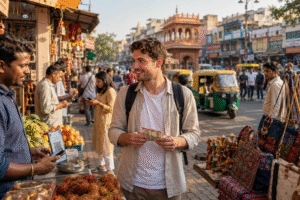
Tipping in India sits somewhere between genuinely expected and completely optional, depending on where you are, who served you, and whether the bill already included a service charge nobody pointed out to you. Most foreign tourists either overtip out of habit from home or undertip out of uncertainty, and the service charge trap catches almost everyone at least once.
Clear amounts for every situation, the service charge confusion explained properly, who actually expects a tip and who does not, and how to pay when you are holding the wrong denominations or no cash at all.
Key highlights
- Tipping is not legally required anywhere in India. It is a genuine gesture of appreciation, not a mandatory gratuity system like the United States.
- Many Indian restaurants in tourist areas add a 5% to 10% service charge to the bill. This is not a tip for your server. Check your bill before leaving an additional tip.
- Standard restaurant tip when no service charge applies: 10% for bills under Rs 1,000 (approx $11), 7% to 10% for Rs 1,000 to Rs 3,000 (approx $10 to $32).
- Auto-rickshaws do not require a formal tip. Rounding up to the nearest Rs 10 is sufficient and appreciated.
- Always tip in Indian Rupees. Foreign currency tips are impractical for most service workers to exchange.
- Digital tipping via UPI QR code is increasingly available at mid-range and upscale restaurants and hotels. Foreign tourists can access this through a UPI wallet like CheqUPI.
Tipping culture in India: what foreign tourists need to understand first
India does not operate under a fixed tipping percentage model like the United States, nor does it follow the no-tipping culture seen in Japan or parts of Europe. Tipping in India is flexible, situational, and based on service quality rather than obligation.
The word “baksheesh” covers tips, charitable giving, and small payments for minor services all in one concept. You will hear it occasionally, particularly near major monuments. In the tourism industry, from hotel staff to private drivers to restaurant servers, tips form a meaningful part of income, especially for workers on modest fixed wages in tourist-facing roles. A Rs 100 (approx $1) tip to a housekeeper earning Rs 15,000 (approx $159) per month is a more significant gesture than the same percentage tip at a restaurant in London or New York. Tipping with that context in mind produces better decisions than applying a mechanical percentage to every transaction.
The service charge trap: read your bill before tipping
This is the single most common mistake foreign tourists make at Indian restaurants, and it costs many of them money they did not intend to spend.
Many restaurants in tourist areas of Delhi, Mumbai, Jaipur, Goa, and other major destinations add a service charge of 5% to 10% directly to your bill. This charge goes to the establishment, not to your server. Staff may or may not receive a portion of it depending on the restaurant’s internal policy. It is separate from GST (Goods and Services Tax), which also appears on restaurant bills and is a government tax, not a tip.
Before leaving any additional tip, check your bill for a line marked service charge. If it is included and the service is standard, no additional tip is needed. If the service was genuinely exceptional, a small direct cash tip handed personally to your server is appropriate and will be more meaningful than adding to the bill. If no service charge is included, tip as described in the section below.
How much to tip at restaurants in India
Fine dining and upscale restaurants
For bills above Rs 3,000 (approx $32), a tip of 5% to 7% is appropriate when no service charge is included. On a Rs 5,000 (approx $53) dinner, that is Rs 250 to Rs 350 (approx $2.50 to $3.50). Hand the tip in cash directly to your server rather than adding it to a card payment, where possible, as cash tips reach the server directly.
Casual and mid-range restaurants
For bills between Rs 1,000 and Rs 3,000 (approx $10.50 to $32), tip 7% to 10% when no service charge is included. For bills under Rs 1,000 (approx. $11), 10% is the standard. On a Rs 600 (approx $6.50) lunch, Rs 60 (approx $1) is appropriate. Always check the bill for a service charge before calculating.
Street food and local dhabas
No tip is expected at street food stalls, local tea stalls, or basic dhaba-style eateries. These are fixed-price, counter-service setups where tipping is not part of the transaction. Paying the stated price without negotiating it down is the more appropriate gesture in these contexts.
How much to tip at hotels in India
Bellboy and porter
Rs 50 to Rs 100 (approx $1) per bag is standard. For a single bag, Rs 50 is appropriate. For multiple bags or heavy luggage carried up several floors, Rs 100 per bag is generous and earned.
Housekeeping
Rs 100 to Rs 200 (approx $1 to $2) per night is appropriate for standard service at mid-range hotels. For luxury properties where service levels are higher, Rs 200 to Rs 300 (approx $2 to $3) per night is suitable. Leave the tip daily on the bedside table or pillow rather than at checkout. Daily tipping ensures the correct staff member receives it, as housekeeping shifts rotate.
Concierge
Tip based on the complexity and quality of assistance. A restaurant recommendation requires no tip. Securing a last-minute reservation, arranging a complex day trip, or resolving a travel problem warrants Rs 200 to Rs 500 (approx $2 to $5), depending on the effort involved. A particularly exceptional concierge service on(approx.ry trip can warrant Rs 500 to Rs 1,000 (approx $5 to $11).
Room service
10% of the room service bill or Rs 50 to Rs 100 (approx $1), whichever is higher, is appropriate. Check whether a service charge was already added to the room service bill before leaving an additional tip.
How much to tip drivers and transport in India
Auto-rickshaws
Rounding up to the nearest Rs 10 is the standard approach. If the fare is Rs 73, handing over Rs 80 is appropriate. A formal percentage-based tip is not expected for a standard auto-rickshaw journey. For an auto-rickshaw driver who waited, helped with heavy bags, or navigated a particularly difficult route, Rs 20 to Rs 50 (approx $0.50 to $1) on top of the fare is a generous acknowledgement.
App-based cabs (Uber and Ola)
Both Uber and Ola have in-app tipping options. Rs 20 to Rs 50 (approx $0.2 to $0.6) for standard city journeys. Rs 50 to Rs 100 (approx $1) for longer airport runs or rides with extra assistance. In-app tips are convenient for foreign tourists as they require no cash.
Private car and driver (day hire)
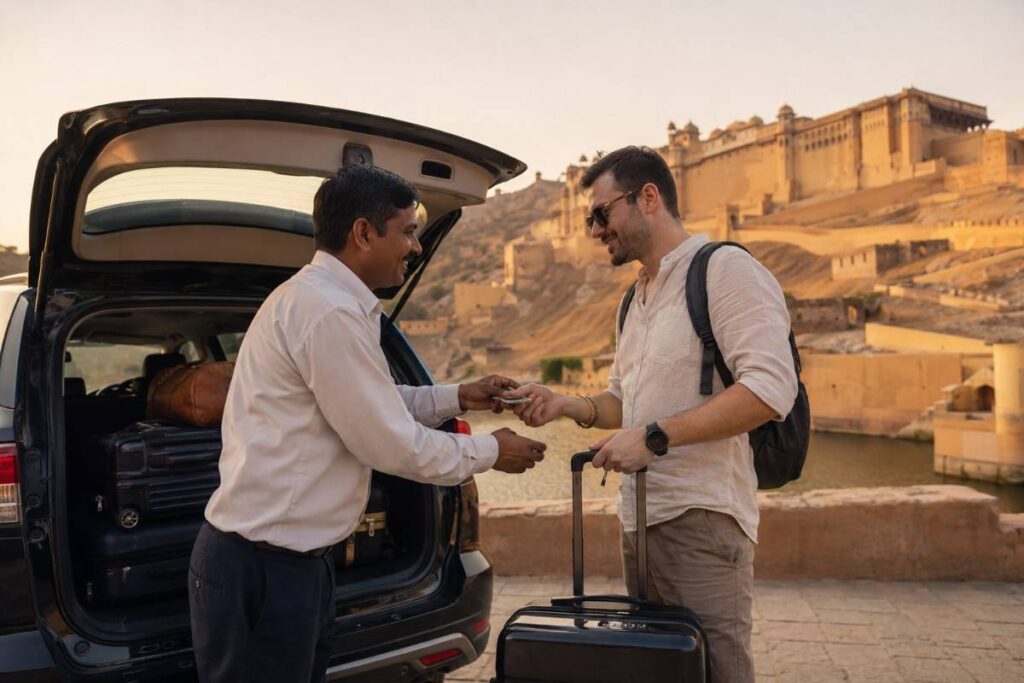
Rs 300 to Rs 500 (approx $3 to $5) at the end of a full day is appropriate for a city sightseeing tour. If the driver navigated difficult routes, waited patiently at multiple sites, or provided useful local recommendations, tip toward the higher end. Hand the tip personally at the end of the day with a direct thank you.
Multi-day private drivers
Rs 400 to Rs 600 (approx $4 to $6.5) per day for a multi-day circuit such as the Golden Triangle or a Rajasthan tour. A driver accompanying you for five days should receive Rs 2,000 to Rs 3,000 (approx $21 to $32) at the end of the trip if the service was consistently good. Tip at the end of the full engagement rather than daily.
How much to tip tour guides in India
Walking tour and half-day guides: Rs 200 to Rs 400 ($2.38 to $4.76) per person for a group tour. Rs 300 to Rs 500 ($3.57 to $5.95) for a private half-day guide.
Full-day private guides: Rs 500 to Rs 800 (approx $5 to $9) is appropriate for a full day of attentive, knowledgeable guiding. An exceptional guide who went significantly beyond expectations warrants Rs 1,000 (approx $12) or more.
Multi-day guides accompanying you across cities or states: Rs 600 to Rs 1,000 (approx $6.50 to $11) per day based on service quality. Tip at the end of the full engagement. Always hand the tip directly and personally. A guide who receives a tip handed directly with a genuine thank-you remembers the interaction far more positively than one whose tip is left on a table.
How to actually pay tips in India as a foreign tourist
Cash tips: why small denominations matter
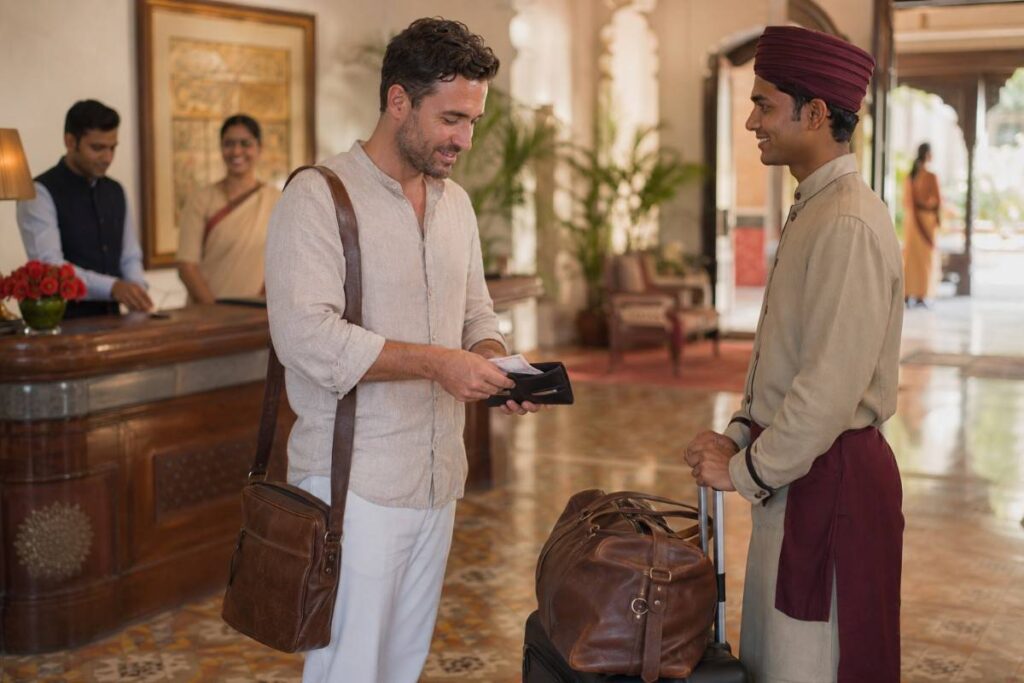
The most common practical problem with tipping in India is having the wrong denominations. ATMs dispense Rs 500 (approx $5) notes. A bellboy tip of Rs 100 (approx $1) requires change that most tourists do not have on arrival. Break Rs 500 notes at hotel receptions, pharmacies, or supermarkets as early as possible each day. Carry a dedicated supply of Rs 10, Rs 20, Rs 50, and Rs 100 notes specifically for tipping.
Digital tipping via UPI
UPI QR code tipping is becoming more common at mid-range and upscale restaurants, hotel restaurants, and with some tour operators. In many cases, you can add a tip while paying your bill through the merchant’s UPI QR code, making the process quick, cashless, and convenient. However, if a service provider only displays a personal UPI ID or QR code for tips, you’ll need to use cash, as many tourist UPI wallets do not support person-to-person (P2P) transfers.
How CheqUPI helps with tipping
CheqUPI lets foreign tourists make seamless UPI payments by scanning merchant QR codes, eliminating the need for cash or exact change when paying at participating businesses. If a merchant offers a digital tipping option as part of the payment, you can tip during checkout. For a complete guide on setting up and using a UPI wallet as a foreign tourist in India, see our complete UPI guide.
When not to tip in India
Street food stalls and local tea shops do not operate under tipping expectations. Government ticket counters at heritage sites, museum entry desks, and ASI-operated sites have no tipping culture. Supermarkets, chemists, and petrol station attendants do not expect tips. Fixed-price souvenir shops in government emporiums are no-tip environments. Tipping in these contexts is not expected, will occasionally create confusion, and is not necessary to ensure good service.
Conclusion
Tipping in India rewards tourists who arrive with a clear framework rather than applying home-country habits to a very different context. Check every bill for a service charge before adding to it. Carry small-denomination notes specifically for tipping from the first day. Tip tour guides and multi-day drivers at the end of the full engagement rather than daily. And if you have a UPI wallet loaded and ready, digital tipping is the cleanest solution when you are out of small notes at exactly the wrong moment.
FAQs
1.How much should I tip at a restaurant in India?
Check the bill for a service charge first. If none is included, tip 10% for bills under Rs 1,000 (approx $11), 7% to 10% for Rs 1,000 to Rs 3,000 (approx $10.60 to $32), and 5% to 7% for bills above Rs 3,000 (approx $32).
2.Is tipping mandatory in India?
No. Tipping is not legally required anywhere in India. It is a gesture of appreciation for good service, not a mandatory gratuity like in the United States.
3.How much should I tip an auto-rickshaw driver in India?
Round up to the nearest Rs 1 (approx. an Rs 73 fare); hand over Rs 80. A formal percentage-based tip is not expected for standard auto-rickshaw journeys.
4.What is baksheesh in India?
“Baksheesh” is a broad term covering tips, charitable giving, and small payments for minor services. You may hear it near major monuments. In tourism contexts, it usually refers to a tip for a service provided.
5.Should I tip Uber and Ola drivers in India?
Both apps have in-app tipping options. Rs 20 to Rs 50 (approx $0.2 to $0.5) for standard city rides. Rs 50 to Rs 100 (approx $1) for airport runs or rides with extra assistance.
6.How much should I tip hotel housekeeping in India?
Rs 100 to Rs 200 ($1.19 to $2.38) per night at mid-range hotels. Rs 200 to Rs 300 ($2.38 to $3.57) at luxury properties. Leave the tip daily rather than at checkout so the correct staff member receives it.
7.How do I tip in India without cash?
Use a UPI wallet like CheqUPI to make cashless payments at restaurants, hotels, and other merchants that accept UPI QR codes. If the merchant offers a digital tipping option as part of the payment, you can add a tip without needing cash or an Indian bank account.
8.How much should I tip a tour guide in India?
Rs 300 to Rs 500 (approx $3.50 to $5) for a private half-day guide. Rs 500 to Rs 800 (approx $5 to $9) for a full-day private guide. Rs 600 to Rs 1,000 (approx $6 to $11) per day for multi-day guides. Tip at the end of the full engagement.
9.What is the tipping etiquette at Indian restaurants for foreign tourists?
Check the bill for a service charge before tipping. If included, no additional tip is required unless the service was exceptional. If not included, tip 7% to 10% directly in cash to your server.
10.How much should I tip a private driver in India?
Rs 300 to Rs 500 (approx $3 to $6) for a full-day city hire. Rs 400 to Rs 600 (approx $4 to $7) per day for multi-day tours. Tip at the end of the full engagement, handed personally.
“Running out of small notes at the exact moment you want to tip is the most avoidable frustration in India. Download CheqUPI. Activate your wallet after arriving in India and start paying with UPI in minutes.”