Introduction
An Indian wedding invitation is one of the best things that can land in your inbox. It usually comes with a week of celebrations, food that makes everything else feel inadequate by comparison, and the kind of hospitality that stays with you for years. It also comes with a list of questions nobody warned you about. What exactly do you wear to a mehendi versus a reception? How much goes in the shagun envelope? And when you arrive in India and a vendor at the wedding market holds up a QR code instead of a card terminal, how do you actually pay?
This covers every practical question a foreign guest needs answered before they land. Ceremonies, dress codes, shagun etiquette, shopping, getting around, and how to handle money across a multi-day Indian wedding without fumbling for an ATM every time you need to pay for something. Sort out the practical side before you fly, and you can give the celebrations the attention they deserve.
What to expect at an Indian wedding
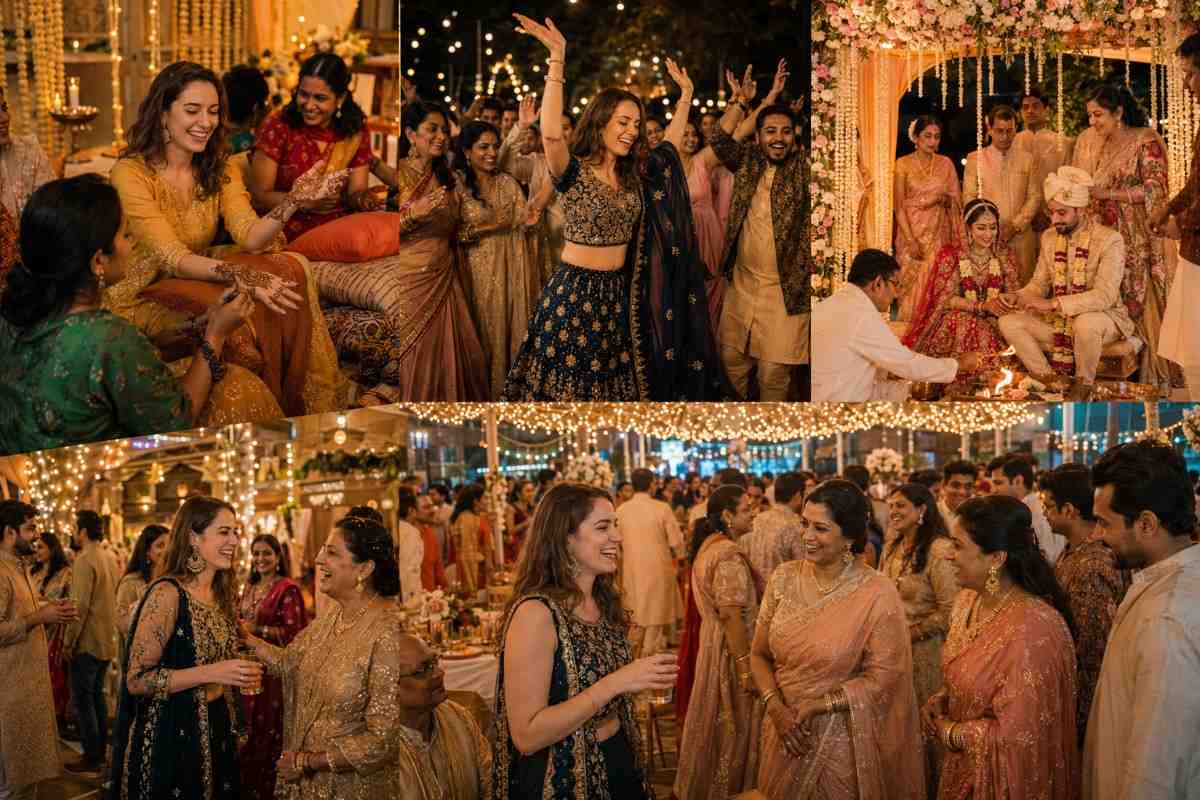
Indian weddings are not one event. They are a sequence of ceremonies spread across two to five days, each with its own dress code, mood, and meaning. As a foreign guest, you will likely be invited to some or all of them depending on how close you are to the family.
Mehendi
The mehendi is an afternoon or evening gathering, usually two days before the main wedding, where henna artists apply intricate designs to the bride and female guests. The mood is relaxed and celebratory. Bright colors work well. This is one of the most photogenic and personal ceremonies of the entire wedding, and foreign guests are almost always welcomed warmly into it.
Sangeet
The sangeet is an evening of music and dance, usually the night before the wedding. Both families perform choreographed dances, often rehearsed for months. Foreign guests are frequently invited to join in. Wear something festive and comfortable enough to dance in. The sangeet can run late into the night.
Haldi
The haldi is a morning ritual where turmeric paste is applied to the bride and groom by family members. It is joyful, messy, and deeply personal. Wear something you do not mind getting stained. Mustard or bright yellow, sometimes white or very pale colors, are commonly worn to haldi specifically because the yellow turmeric marks are considered auspicious, but check with the family first, as this varies.
The main wedding ceremony
The main ceremony varies significantly by religion and region. A Hindu wedding typically centers on the pheras, the seven circles the couple takes around a sacred fire, and can last several hours. A Muslim nikah is usually shorter. A Sikh wedding, the Anand Karaj, takes place at a Gurudwara. Arrive on time, dress formally, and follow the lead of other guests around you for when to sit, stand, or participate.
Reception
The reception is the most accessible event for foreign guests. It typically happens the evening of or the day after the wedding. Think of it as a large celebratory dinner. Dress formally. This is where speeches, dinner, and dancing happen and where you are most likely to meet the full extended family.
What to wear as a foreign guest
The most common mistake foreign guests make is either overdressing in Western formal wear or underdressing because they are not sure what Indian wedding clothes look like on them. Both are avoidable.
Mehendi and Sangeet
Bright colors are ideal. Yellows, pinks, oranges, and greens all work well. A salwar kameez or lehenga for women, or a kurta-pajama for men, is always appreciated, and many foreign guests find that shopping for one in India before the wedding is one of the highlights of the trip. Avoid white and avoid black as a primary color at these events, as both carry associations that can feel out of place at a celebratory gathering, though this varies by family and region.
Haldi
Wear something comfortable that you genuinely do not mind staining. Many guests wear a simple white kurta for this reason. Old clothes you travel in are perfectly acceptable. Do not wear anything you want to keep clean.
Main ceremony and reception
This is when you bring out your best. A saree, lehenga, or sharara for women. A sherwani, bandhgala, or well-tailored kurta for men. If you choose Western formal wear for the reception, aim for cocktail or black-tie levels. The bar is high at Indian weddings, and guests tend to dress up significantly. Avoid white for the main ceremony. Gold, jewel tones, and rich colors are always right.
The shagun envelope: what it is and how much to give
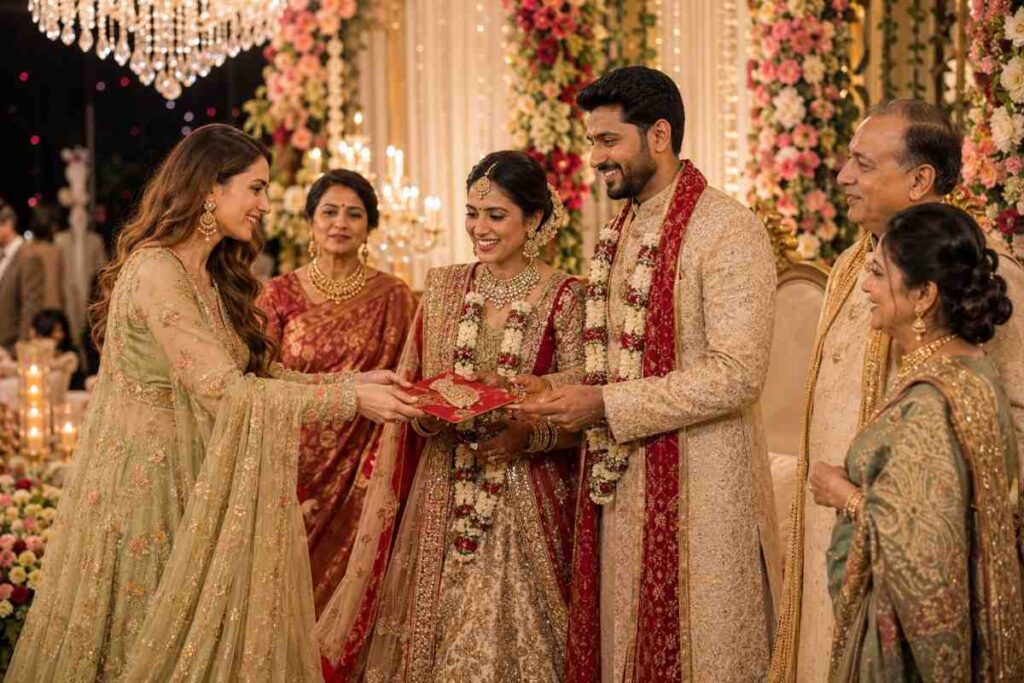
Shagun is the tradition of giving a monetary gift to the couple or their family at an Indian wedding. It is expected and completely normal. The amount varies by your relationship to the family, the scale of the wedding, and the city or region. As a foreign guest, you are not expected to know the exact conventions, but arriving with something thoughtful is always appreciated.
The amounts below are approximate ranges for 2026 and vary by city, family, and relationship. Verify with someone close to the family if you are unsure.
| Relationship | Approximate shagun range (INR) | Approximate (USD) |
| Close friend of bride or groom | Rs 5,000 to Rs 11,000 | $53 to $117 |
| Colleague or acquaintance | Rs 2,100 to Rs 5,000 | $22 to $53 |
| Relative (distant) | Rs 5,100 to Rs 21,000 | $54 to $223 |
| Relative (close) | Rs 11,000 to Rs 51,000 | $117 to $542 |
Note: Shagun amounts vary significantly by family, region, and the scale of the wedding. Odd numbers ending in 1 (Rs 5,001, Rs 11,001) are traditional because they symbolize an open-ended blessing rather than a closed transaction. These figures are estimates for 2026. Prices vary, and it is always best to check with someone close to the family before deciding. USD conversions are approximate at Rs 94 to $1.
Cash is the traditional shagun method and is still preferred by most families. Place it in a decorated envelope available at any stationery shop in India. Some families now accept digital transfers via UPI for shagun, in which case a prepaid UPI wallet like CheqUPI makes this straightforward from your phone.
How to pay at an Indian wedding as a foreign guest
An Indian wedding touches almost every kind of payment situation you will encounter in India. Wedding market vendors, auto-rickshaws to the venue, tips for the henna artist, shopping for a last-minute outfit, contributions to group gifts, and meals at local restaurants between events. Almost all of it runs on UPI QR codes.
Your international Visa or Mastercard cannot read those QR codes. UPI runs on a domestic bank-to-bank rail managed by the National Payments Corporation of India (NPCI), and international card networks have no connection to it. A foreign traveller on a tourist visa also cannot open an Indian bank account, which means standard UPI apps like PhonePe and Google Pay are not an option either.
CheqUPI is an RBI-licensed prepaid wallet built by Terrafin Solutions Private Limited for exactly this situation. You load it from your international card, get a UPI ID, and pay any merchant QR code in India by scanning, the same way every local does. It works at the wedding market boutiques in Jaipur, the auto-rickshaw outside the venue, the mehendi artist’s stall, and the restaurant where the family takes you for lunch between ceremonies.
CheqUPI is for paying registered merchants (P2M). P2P transfers are not supported under RBI regulations. For shagun and personal cash gifts, you will need physical cash. Withdraw from an ATM in the wedding city before the events begin. For everything else, your CheqUPI wallet covers it. After arriving in India, a quick verification step activates your wallet in 5 to 10 minutes. Check CheqUPI for current locations and coverage.
What it costs to use CheqUPI
| Cost | Detail |
| Joining fee | CheqUPI is free to join for all eligible nationalities. |
| Loading fee | 2.95% + applicable taxes for all foreign users. There are no transaction fees when paying merchants through UPI. |
| Merchant payment fee | 0% at every merchant |
| Currency conversion | Your own bank handles this. CheqUPI charges no forex markup. |
Note: Fees above are based on CheqUPI’s published rates at the time of writing. Figures may change. Always check for the latest rates before you travel.
Wedding shopping and vendor payments
Shopping for a wedding outfit in India is one of the genuinely great things about attending an Indian wedding as a foreign guest. The markets and boutiques in cities like Jaipur, Delhi, Mumbai, and Hyderabad have options at every price point, and the experience of buying a lehenga or sherwani from a local market is hard to replicate anywhere else.
Most established boutiques and larger market shops now accept UPI. Smaller stalls and street vendors may be cash-only. The practical rule is to carry Rs 5,000 to Rs 10,000 in cash for small vendors and tips and use your CheqUPI wallet for larger purchases at shops that display a QR code.
Henna artists at the wedding and at local markets usually accept UPI now, especially in major cities. Tips for photographers, musicians, and service staff at the wedding itself are almost always cash. Have small denomination notes ready for these.
Practical tips for foreign guests
Indian weddings run on a different time logic than most foreign guests expect. The invitation may say 7 PM. Guests typically arrive between 8 and 9 PM. The couple may not appear until 10 or 11 PM. This is not disorganization. It is the rhythm of how Indian celebrations work. Relax into it rather than arriving at 7 PM and wondering where everyone is.
Food at Indian weddings is typically abundant and extraordinary. Vegetarian options are always available and are often the highlight. If you have dietary restrictions, tell the family in advance rather than trying to navigate it at the buffet. Alcohol is served at most modern urban weddings but not at all. If you are unsure, ask the family before the event.
Photography is generally welcomed and encouraged at Indian weddings, but ask before pointing a camera at the main ceremony rituals. Some families prefer the phrasal and key religious moments to be observed quietly rather than photographed by every guest simultaneously.
Remove your shoes before entering a place of worship, including Gurudwaras and mandaps. This is non-negotiable and applies to every guest regardless of religion.
How to get around during a multi-day wedding
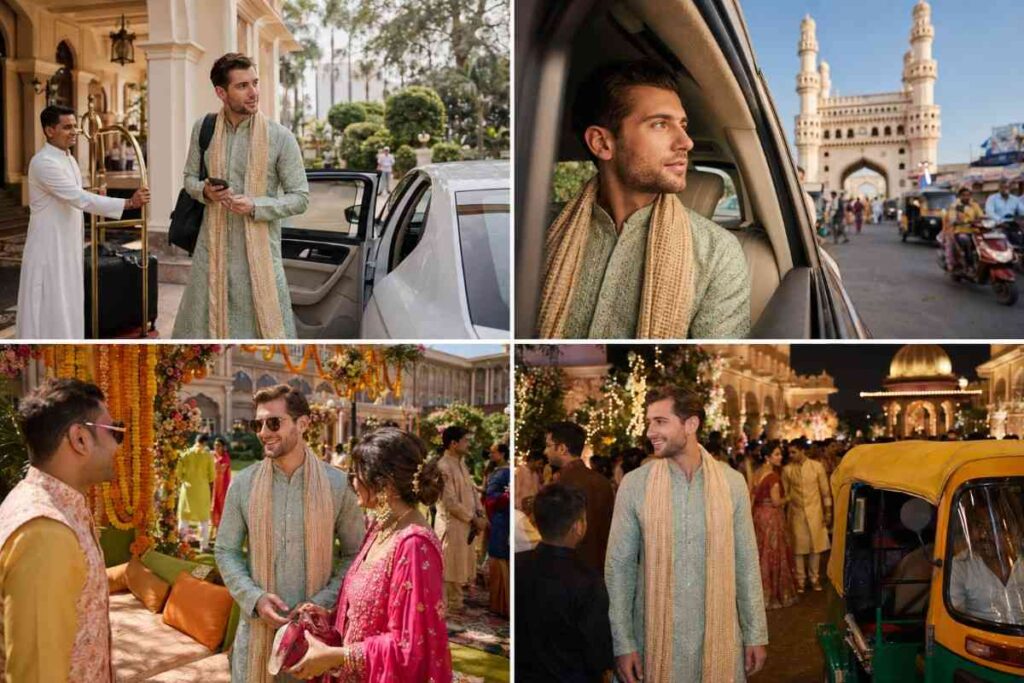
Indian weddings often involve venues spread across a city, with different ceremonies at different locations on different days. Ola and Uber both operate reliably in most major Indian cities and are the most practical transport option for foreign guests. Both accept UPI payments, which means your CheqUPI wallet handles every ride without needing cash.
Auto-rickshaws are a faster option for shorter distances in congested city traffic. Many auto drivers now use UPI QR codes. Agree on a fare before you get in, or use the app-based auto options on Ola and Uber, which have metered pricing. Keep Rs 100 to Rs 200 in small notes for situations where a driver prefers cash.
Conclusion
An Indian wedding is one of the most generous, joyful, and visually extraordinary experiences you can have as a traveler. The preparation pays off. Know the ceremonies, dress for each one, have your shagun ready, and sort your payments before you arrive so that shopping at the wedding market and paying for an auto outside the venue are never a problem. A CheqUPI wallet loaded before your flight covers the majority of your spending across every wedding event. The rest, shagun cash and tips for staff, you handle at the ATM when you land.
Frequently asked questions
1. What should a foreign guest wear to an Indian wedding?
Wear Indian ethnic clothing if possible. A salwar kameez or lehenga for women and a kurta for men. Avoid white and black as primary colors. Bright jewel tones work for most ceremonies. Check with the family for specific dress codes per event.
2. How much should I put in a shagun envelope as a foreign guest?
Rs 5,000 to Rs 11,000 for a close friend. Rs 2,100 to Rs 5,000 for a colleague or acquaintance. Use an odd number ending in 1 by tradition. Check with someone close to the family if you are unsure of the right amount for your relationship. There is no fixed amount to give, which depends entirely on your comfort level and relationship with the family.
3. What ceremonies happen at a typical Indian wedding?
Most Indian weddings include mehendi, sangeet, haldi, the main ceremony, and a reception. Each happens on a different day and has its own dress code and mood. You may be invited to some or all, depending on how close you are to the family.
4. Can I wear Western clothes to an Indian wedding?
Yes, especially at the reception. Aim for a cocktail or formal level. Indian ethnic wear is always more appreciated and is worth buying locally before the events begin if you have the time.
5. What colors should I avoid at an Indian wedding?
Avoid white as a primary color at most ceremonies and avoid black at mehendi and sangeet. Both carry associations that can feel out of place. Bright colors and rich jewel tones are almost always right.
6. How do I pay for things at an Indian wedding in India?
Most vendors, shops, and transport around the wedding use UPI QR codes. Your foreign card cannot reach those directly. A prepaid UPI wallet like CheqUPI loads from your international card and lets you pay any QR code in India. Keep cash for shagun and staff tips.
7. Do I need cash at an Indian wedding as a foreign guest?
Yes. Shagun envelopes are cash. Tips for wedding staff, musicians, and small vendors are in cash. Withdraw Rs 5,000 to Rs 10,000 before the events begin. Use a UPI wallet for everything else, including shopping, transport, and restaurant meals.
8. What is the mehendi ceremony at an Indian wedding?
Mehendi is a pre-wedding celebration where henna designs are applied to the bride and female guests by professional artists. It usually happens two days before the main ceremony. The mood is relaxed and joyful. Foreign guests are warmly welcomed.
9. What is the sangeet at an Indian wedding?
Sangeet is an evening of music and dancing, usually the night before the wedding. Both families perform choreographed dances. Foreign guests are often invited to join in. Wear something festive and comfortable enough to move in.
10. What happens at an Indian wedding reception?
The reception is a large celebratory dinner held the evening of or after the main ceremony. It includes speeches, a formal dinner, and dancing. Dress formally. This is where you will meet the full extended family and celebrate with the couple.
“India’s wedding season runs from October to February and from April to June, and the celebrations happen across every city. Sort your wallet before your flight so that every vendor, every auto-rickshaw, and every boutique at the wedding market is one you can pay for without a second thought. Download CheqUPI. Activate your wallet after arriving in India and start paying with UPI in minutes.”