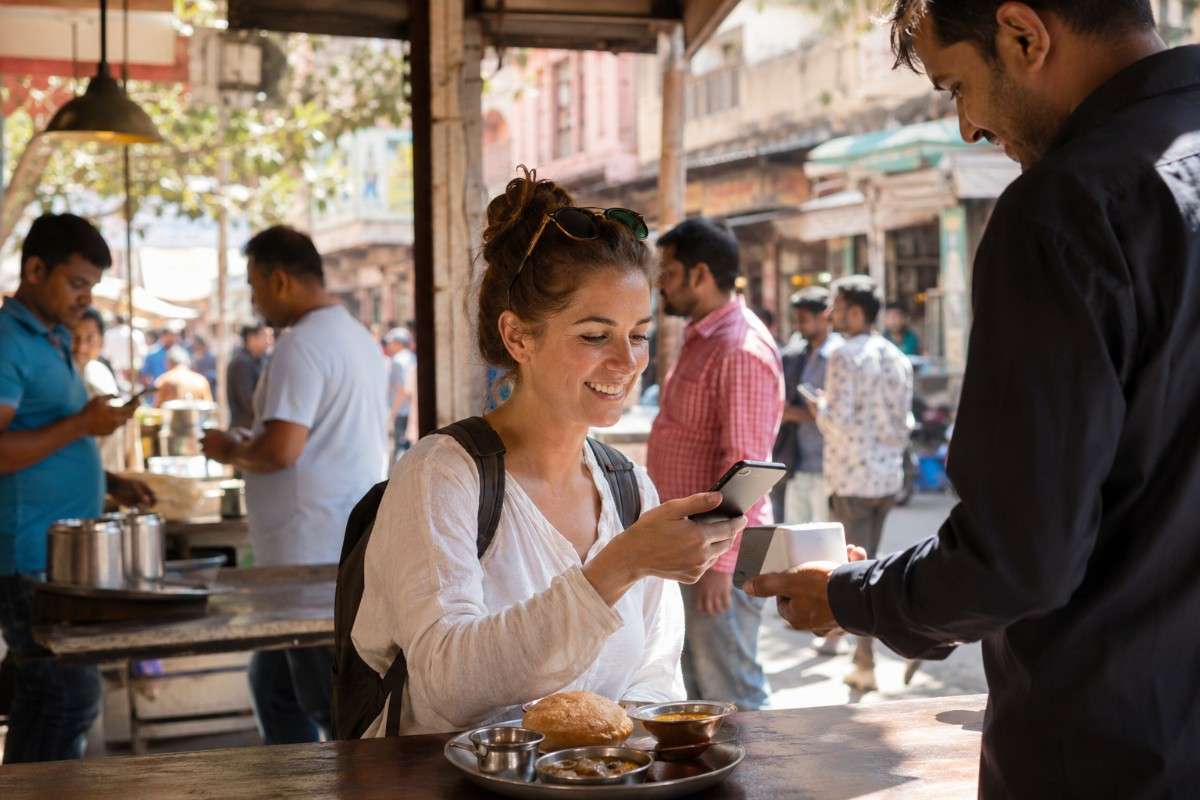
India runs on UPI. From street food carts in Mumbai to heritage hotels in Udaipur, the QR code has replaced the card terminal as the default way to pay. Foreign tourists who arrive with a loaded UPI wallet feel that shift immediately, until a payment fails mid-transaction and no one at the counter can explain why.
The answer is almost always a transaction limit. This post breaks down every cap that applies to a foreign tourist wallet in India, what triggers the cooling-off period, and exactly what to do when a limit is reached.
Key highlights
- Per-transaction limit for tourist wallets: Rs 1,00,000 (approx $1,045).
- Daily transaction limit: Rs 1,00,000 (approx $1,045), capped at 25 transactions a day.
- Monthly transaction limit: Rs 5,00,000 (approx $5,225).
- Maximum wallet balance allowed at any time: Rs 2,00,000 (approx $2,090).
- Cooling-off period after your first transaction: Rs 50,000 cap (approx $522) and 5 transactions.
- Tourist wallets support Person-to-Merchant payments only. P2P transfers are not supported.
- CheqUPI is free to join for all eligible nationalities, with a loading fee of 2.95% + taxes and a 0% merchant payment fee.
What are the UPI transaction limits for foreign tourists

Tourist wallets like CheqUPI follow RBI’s Prepaid Payment Instrument rules, which set separate caps for individual transactions, daily use, and monthly use. These limits apply regardless of how much money you load into the wallet at once. Understanding each cap before you start spending helps you plan larger purchases like hotel bookings or shopping trips.
For a broader understanding of how UPI works for foreign tourists in India, read our UPI payment guide for foreigners in India.
Per-transaction limit
A single transaction on a CheqUPI tourist wallet cannot exceed Rs 1,00,000 (approx $1,045). This applies to any one payment to a merchant, whether it is a hotel bill or a retail purchase. If your bill runs higher, you will need to split the payment or use a card as backup.
Daily transaction limit and count
The daily cap on total spending is Rs 1,00,000 (approx $1,045), matching the per-transaction cap. Beyond the rupee cap, CheqUPI also limits you to 25 transactions in a single day. Both limits reset at midnight, not 24 hours from your last payment.
Monthly transaction limit
Total spending across a calendar month is capped at Rs 5,00,000 (approx $5,225). This is the figure most relevant for longer trips, since it governs your total spend regardless of daily activity. Once you approach this cap, later payments in the same month may be declined.
Maximum wallet balance
CheqUPI wallets cannot hold more than Rs 2,00,000 (approx $2,090) at any given time. Loading more than this cap will fail until you spend down your existing balance. This rule exists to limit how much value sits in a single prepaid instrument.
The first 24 hours: cooling-off period explained
The cooling-off period begins with your first transaction, not the moment you activate the wallet. During this window, CheqUPI caps spending at Rs 50,000 (approx $522) and allows a maximum of 5 transactions.
This shorter window exists to limit fraud risk on wallets that have just started moving money. Plan your first day’s spending around this lower cap, especially if a hotel stay or tour booking is due right after arrival.
Why these limits exist
RBI treats foreign tourist wallets as a distinct category within its Prepaid Payment Instrument framework, separate from resident bank-linked UPI accounts. These caps balance convenience against the risk of a prepaid instrument being misused for large undocumented transfers.
Foreign tourist wallets carry a person-to-merchant-only restriction. You can pay registered shops, restaurants, and hotels, but you cannot send money directly to another person. To understand UPI access for foreign tourists, read our guide on whether foreign tourists can use UPI in India.
This is different from resident UPI apps, which allow both P2P and P2M transactions under RBI’s general framework.
What happens if you hit a limit mid-trip
If a payment fails because you have hit a cap, the fix depends on which limit you reached. A per-transaction cap means splitting the payment into two smaller ones or paying part in cash. A daily or monthly cap means waiting until the reset or switching temporarily to your international card for that purchase.
Keeping a small cash buffer alongside your wallet covers these moments without disrupting your day. For why cash still matters in India, read our guide on problems with carrying cash in India for foreign visitors.
How these limits affect your trip budget
A Rs 5,00,000 (approx $5,225) monthly cap comfortably covers most short- and mid-length tourist trips. It accounts for hotels, food, and shopping without running close to the ceiling. Longer stays or bigger purchases like jewelry need planning around the monthly reset date.
Once the calendar month resets, the full Rs 5,00,000 cap is available again. Keep track of your monthly spend inside the CheqUPI app so the ceiling never catches you mid-purchase.
UPI limits and staying safe with digital payments

Sticking within your daily transaction count also reduces exposure if your phone is lost or your wallet app is compromised mid-trip. Splitting large payments across two transactions is normal and not a sign of a problem with your wallet.
If a payment fails for a reason that does not match any limit above, contact CheqUPI support via WhatsApp or at contactus@terrafin.tech. Do not attempt to dispute payments through third-party channels.
How to check your CheqUPI wallet limits
Your current daily, monthly, and balance limits are visible inside the CheqUPI app under your wallet summary screen. Checking this before a big purchase avoids a failed payment at the counter. The figures update in real time as you spend, so the balance shown always reflects your current position.
Conclusion
Tourist wallets like CheqUPI come with clear, fixed limits: Rs 1,00,000 per transaction and per day, Rs 5,00,000 a month, and a Rs 2,00,000 maximum balance. The first 24 hours after your first transaction carry a lower Rs 50,000 cap, so plan your early spending accordingly. Understanding these limits before your first payment means no surprises at the counter.
FAQs
What is the per-transaction limit for CheqUPI?
Rs 1,00,000 (approx $1,045) per single transaction to a registered merchant.
What is the daily UPI limit for foreign tourists?
Rs 1,00,000 (approx $1,045) total per day, across a maximum of 25 transactions.
What is the monthly UPI limit for tourist wallets?
Rs 5,00,000 (approx $5,225) total spending allowed within a calendar month.
What is the limit during the first 24 hours?
Rs 50,000 (approx $522) and 5 transactions, starting from your first transaction, not activation.
How many UPI transactions can I make in a day?
Up to 25 transactions per day on a CheqUPI tourist wallet.
How much balance can I keep in my CheqUPI wallet?
A maximum of Rs 2,00,000 (approx $2,090) can sit in the wallet at any time.
Can I send money to another person using CheqUPI?
No. Tourist wallets support Person-to-Merchant payments only. P2P transfers are not supported.
What happens if I hit my daily or monthly limit?
The payment fails until the limit resets, so use cash or a card for that purchase in the meantime.
Do NRIs have different UPI limits than tourists?
NRIs use the same wallet and limits as foreign tourists. Only the required verification documents differ.
Can I request a higher transaction limit on CheqUPI?
Limits follow RBI’s PPI framework for foreign tourist wallets and are not adjustable per user.
“Knowing your wallet limits before you travel helps you avoid declined payments and plan bigger purchases with confidence. Download CheqUPI before your trip and complete activation after arriving in India.”