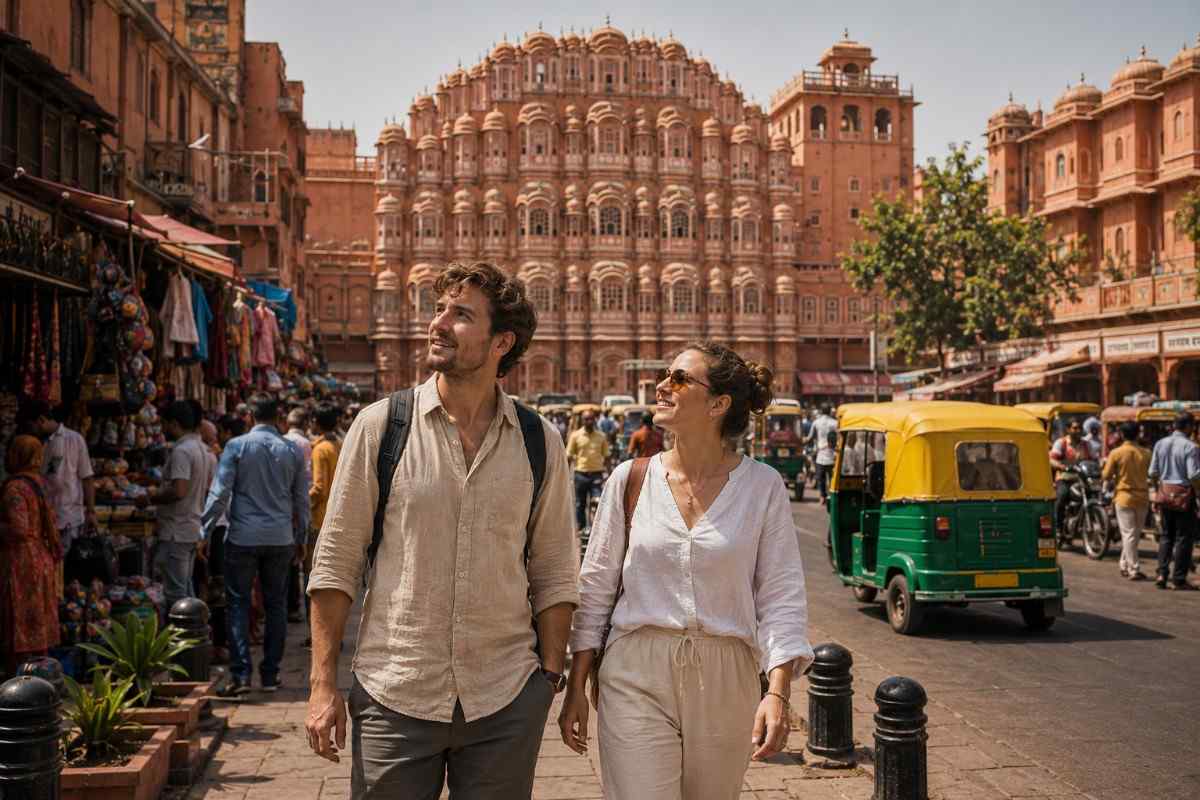
Jaipur is one of India’s most rewarding cities for a short break, but fitting its forts, palaces, markets, and cultural attractions into just two days takes careful planning. With sights spread across the old city and the surrounding hills, the order you visit them can make the difference between a relaxed itinerary and a rushed one.
This two-day Jaipur itinerary focuses on the city’s most worthwhile experiences, arranging each stop to help you avoid the busiest crowds and the hottest part of the day. You’ll also find practical tips on monument tickets, local transport, and how foreign tourists can pay for entry fees, shopping, and everyday purchases throughout the trip.
Key highlights
- Jaipur’s composite ticket covers multiple monuments and costs Rs 1,700 (approx $18) for foreign visitors and Rs 550 (approx $6) for Indian nationals.
- Amer Fort needs at least 2 to 3 hours, so start your first morning there before the heat builds.
- Nahargarh Fort offers the best sunset view over the Pink City to close out day one.
- Chokhi Dhani, a Rajasthani cultural village, makes a fitting final evening for day two.
- Many Jaipur markets and monument counters now accept UPI QR payments alongside cash.
- Winter months, November through February, bring the most comfortable weather for walking between sites.
- CheqUPI is free to join for all eligible nationalities, with a loading fee of 2.95% + applicable taxes and 0% merchant payment fee.
Day 1 in Jaipur: forts and the old city
Day one covers Jaipur’s biggest physical climbs and busiest historic sites, so start early to beat both the heat and the crowds. Amer Fort, City Palace, and Nahargarh Fort each reward an early or late visit over a midday one. Space these three out with a proper lunch break in between.
Morning: Amer Fort and Jal Mahal
Amer Fort sits about 20 minutes north of central Jaipur and needs at least 2 to 3 hours to see properly. Entry costs Rs 1,000 (approx $10) for foreign tourists and Rs 200 (approx $2) for Indian residents. Arrive as early as possible, since the mirror palace and courtyards draw large tour groups by mid-morning. A private car or auto-rickshaw from your hotel is the easiest way to get there.
Jal Mahal, the water palace sitting in the middle of Man Sagar Lake, sits right on the road between central Jaipur and Amer Fort. Stop here for a quick roadside photograph on the way to or from the fort. No entry is required the view from the lakeside is the entire experience.
Afternoon: City Palace and Jantar Mantar
City Palace sits in the heart of the old city and holds the former royal family’s residence, courtyards, and museums. Jantar Mantar, a UNESCO World Heritage astronomical observatory, is a short walk away and pairs naturally with the same afternoon. Entry to Jantar Mantar costs Rs 600 (approx $6) for foreign tourists and Rs 100 (approx $1) for Indian residents. Budget close to 1.5 to 2 hours across both sites.
Evening: Nahargarh Fort at sunset
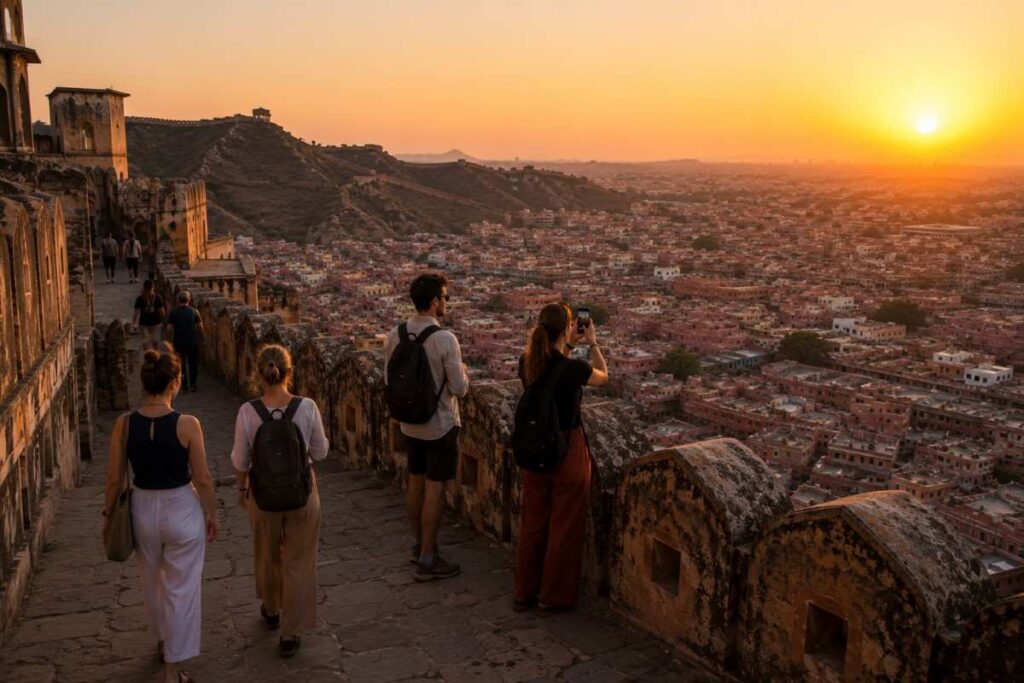
Nahargarh Fort sits on the Aravalli hills overlooking the city and is best timed for late afternoon into sunset. Entry costs Rs 600 (approx $6) for foreign tourists and Rs 100 (approx $1) for Indian residents. The rooftop views over Jaipur’s skyline are the reason most visitors save this stop for last. Head back into the old city afterward for dinner in one of the bazaar-adjacent restaurants.
Day 2 in Jaipur: heritage and culture
Day two shifts from forts to Jaipur’s museums, temples, and its most famous cultural evening. The pace is gentler than day one, with more time spent walking between closely grouped sights. End the day at Chokhi Dhani for a full Rajasthani cultural experience before you leave.
Morning: Hawa Mahal, Albert Hall Museum and Birla Mandir
Hawa Mahal, the honeycomb-fronted Palace of Winds, is best photographed from across the street in the early morning light. Entry costs Rs 600 (approx $6) for foreign tourists and Rs 100 (approx $1) for Indian residents. Albert Hall Museum, Rajasthan’s oldest museum, sits inside Ram Niwas Garden and houses artifacts spanning centuries. Entry costs Rs 300 (approx $3) for foreign tourists and Rs 100 (approx $1) for Indian residents.
Birla Mandir, a white marble temple, sits right next to Albert Hall and makes a natural addition to the same morning. All three are close enough to cover comfortably before lunch.
Evening: Chokhi Dhani
Chokhi Dhani is a recreated Rajasthani village offering folk dances, puppet shows, camel rides, and a traditional thali dinner. It sits a little outside the city center, so plan transport in advance for the return trip. This makes a fitting last stop before you leave Jaipur.
How to pay at Jaipur’s forts, markets, and street vendors
Most Jaipur monuments charge separate entry rates for foreign visitors and Indian nationals. Larger stores in bazaars like Johari and Bapu increasingly accept UPI QR payments alongside cash and card. Smaller stalls and individual vendors may still expect cash only, so carrying both options covers you across the trip.
For the full picture on setting up a UPI wallet before you land, see our UPI payment guide for foreigners in India.
How much a 2-day Jaipur trip costs
A two-day trip through Jaipur’s main sights involves monument entry fees, transport, meals, and an evening at Chokhi Dhani. Foreign visitor rates on composite tickets and individual monuments are higher than resident rates, so budget accordingly. While many attractions and businesses in Jaipur accept digital payments, it’s a good idea to carry some cash if you plan to visit Chokhi Dhani, as some payment counters and vendors may prefer or accept cash only. For a full breakdown of cash challenges foreign tourists face in India, read our guide on problems with carrying cash in India for foreign visitors.
Staying safe while exploring Jaipur
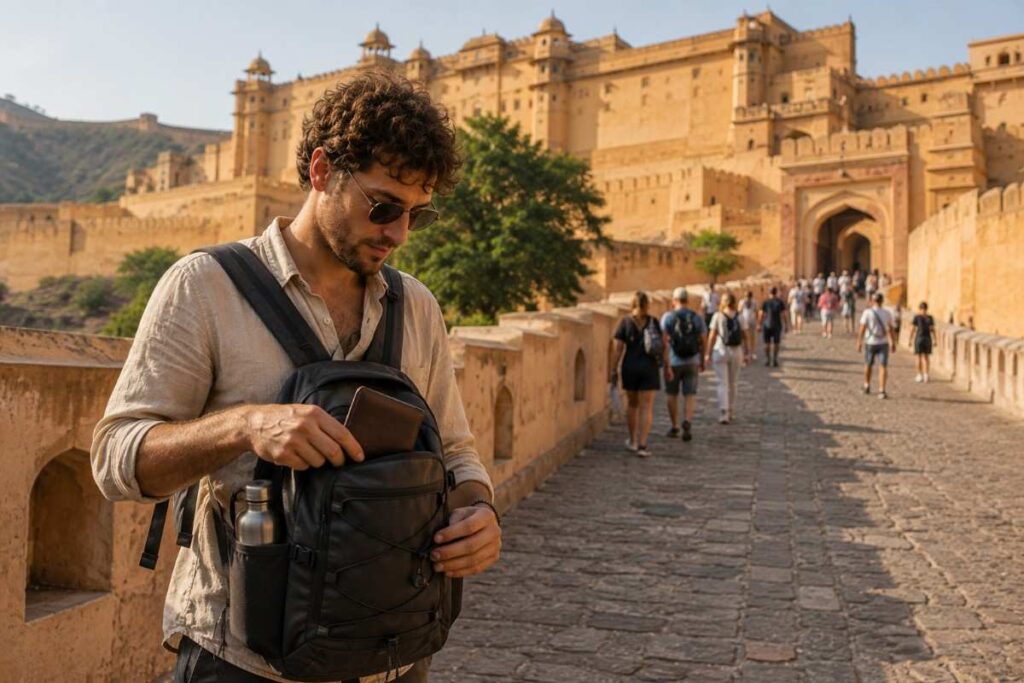
Keep both cash and a working payment method on hand, since not every vendor or monument counter takes the same form of payment. Carry Rs 5,000 to 10,000 (approx $52 to $104) in cash to cover vendors that do not accept digital payments. Avoid handing over large notes for small purchases, as some vendors may not have enough change available.
For guidance on common scams to watch for in Jaipur’s markets, read our guide on scams foreign tourists need to be aware of in India.
Conclusion
Two days in Jaipur works well if you pace the forts on day one and the culture and markets on day two. Start early each morning, keep both cash and a card or wallet ready for entry fees and shopping, and save Chokhi Dhani for your final evening. Plan the route in advance, and Jaipur’s Pink City highlights fit comfortably into a single weekend.
FAQs
1. Is 2 days enough to see Jaipur?
Yes, two days covers Jaipur’s main forts, palaces, and cultural sites if you plan the route in advance.
2. Do foreign tourists pay more for Jaipur monument entry?
Yes. The composite ticket costs Rs 1,700 (approx $18) for foreign visitors and Rs 550 (approx $6) for Indian nationals.
3. What is the best time to visit Jaipur?
November through February brings the most comfortable weather for a two-day walking itinerary.
4. How do tourists get around Jaipur in 2 days?
A private car or auto-rickshaw is the easiest way to move between forts, the old city, and Chokhi Dhani.
5. Can tourists pay cashless at Jaipur’s markets?
Many larger bazaar stores accept UPI QR payments, though smaller stalls may still expect cash.
6. How much cash should I carry in Jaipur?
Carry Rs 5,000 to 10,000 (approx $52 to $104) to cover vendors and transport that do not accept digital payments.
7. What is the Jaipur composite ticket?
A single ticket covering multiple monuments is priced at Rs 1,700 (approx $18) for foreign visitors and Rs 550 (approx $6) for Indian residents.
8. Where should I stay for a 2-day Jaipur trip?
Staying near the old city center keeps most day-two sights within a short auto-rickshaw ride.
9. Can I do Jaipur as a day trip from Delhi?
It is possible but rushed, since Jaipur’s main sights are better covered over two full days.
10. What should I prioritize if I only have one full day?
Amer Fort, City Palace, and Nahargarh Fort at sunset cover Jaipur’s most essential highlights.
“CheqUPI is free to join and charges 0% on merchant payments, so tapping to pay at Jaipur’s bazaars and monument counters costs nothing extra. Download CheqUPI and pay your way through Jaipur.”