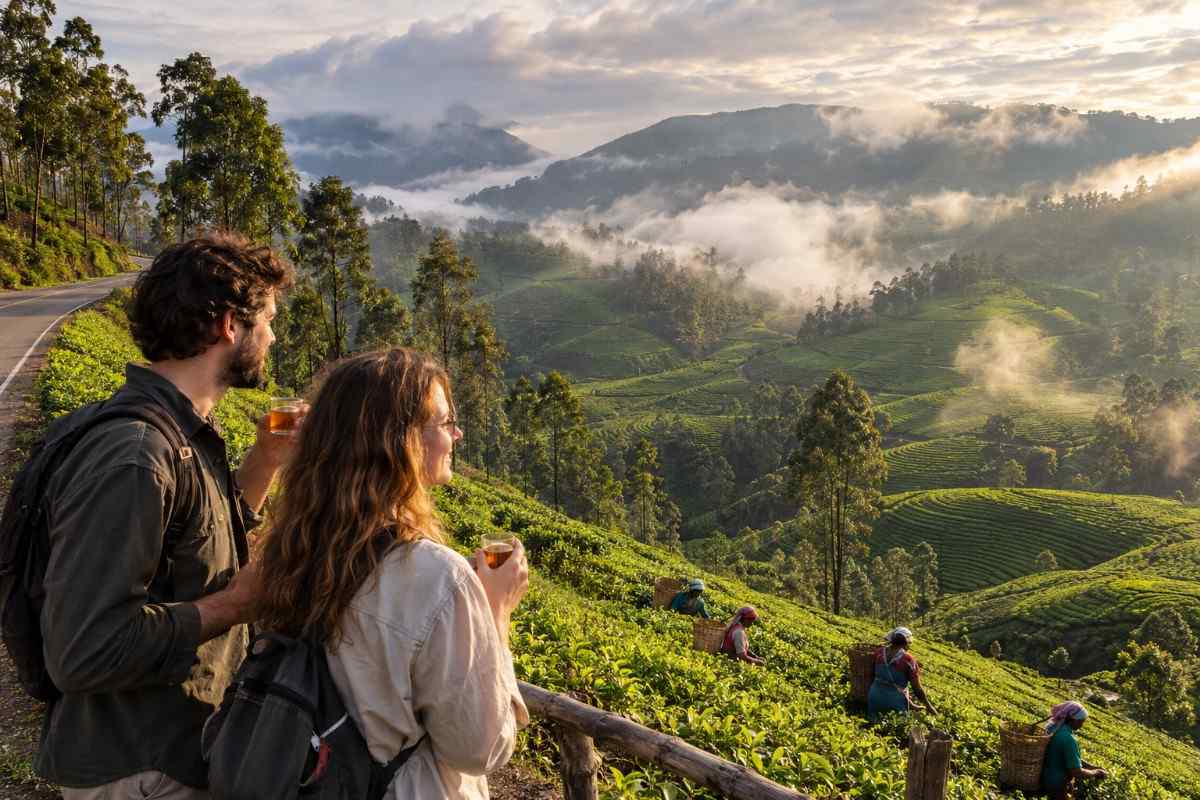
The Western Ghats hold some of the most dramatic tea country in the world, and Munnar sits at the center of it. At nearly 8,000 feet, clouds move slower than the workers in the rows below them. The smell of wet leaves after rain, the mist that refuses to lift until mid-morning, and the rhythm of a century-old factory still sorting the same harvest in Munnar’s tea gardens carry a weight that photographs never quite catch.
Not every estate earns the drive, and some charge different entry fees for foreign visitors than for Indian residents. This post covers which estates are worth visiting, when to go, and how to handle payments once you are there.
Key highlights
- Munnar has more than 50 tea gardens spread across the Idukki district, sitting between 4,500 and 7,900 feet above sea level.
- Kolukkumalai sits at 7,900 feet, making it the highest tea estate in the world.
- Post-monsoon months, September through March, bring the clearest skies and greenest hills for visiting.
- Viewing tea gardens from the roadside is free. Guided walks often cost ₹700 to ₹1,300 (approx $7 to $14) per person.
- Card terminals at remote estates and smaller tea stalls can be unreliable. Carry cash alongside a UPI wallet.
- CheqUPI is free to join for all eligible nationalities, with a 2.95% + taxes loading fee and a 0% merchant payment fee.
- Foreign tourist entry fees at some estates run higher than Indian resident rates; confirm before you go.
Why Munnar’s tea gardens top every Kerala itinerary
Munnar turned from dense forest into a global tea region starting in 1857. British settlers spotted the potential in its cool, high-altitude climate. The estates that followed, from Kannan Devan Hills to Kolukkumalai, still shape the region’s identity today.
Walking through rows of tea bushes with mist hanging over the hills draws most visitors here first. It remains the main reason people add Munnar to their India itinerary.
Best tea estates to visit in Munnar
Kannan Devan Hills Plantation
This is one of the largest and most recognized tea estates in Munnar, tied closely to the Tata Tea legacy. Guided tours walk you through the plucking and processing stages, ending at the on-site tea museum. It works well as a first stop since it gives context for every other estate you visit afterward.
Kolukkumalai Tea Estate
Perched at 7,900 feet, Kolukkumalai is the highest tea plantation in the world and one of the most photographed. A jeep safari gets you up the unpaved road, and the 100-year-old factory still runs on traditional methods. Sunrise here draws visitors well before the estate officially opens.
Lockhart Tea Estate
Lockhart offers a smaller, more personal experience with a heritage factory and a well-marked tea trail. It suits travellers who want fewer crowds and more one-on-one time with a guide. Entry costs Rs 250 (approx $3) per person; confirm current rates before visiting, as pricing can change by season.
Pallivasal Tea Garden
Pallivasal holds a historic place as one of the earliest tea plantations in the Munnar region. The terrain here is gentle, making it ideal for a relaxed walk rather than a strenuous trek. The nearby Attukal Waterfalls make it easy to combine sightseeing with the estate visit.
Sevenmallay Tea Estate
Sevenmallay has well-kept tea rows with a colonial-era bungalow at its center. Birdwatching and casual walking tours are the main attractions, along with views of the surrounding valley. It is less crowded than Kannan Devan Hills but just as photogenic.
Letchmi Tea Estate
Letchmi sits away from Munnar’s busier stops and suits travelers chasing quieter trails. Guided sunrise treks here pass through tea gardens, meadows, and shola forest patches. Views stretch toward the Anamudi range, giving it a wilder feel than the bigger estates.
Munnar’s tea museums worth a stop
The Tata Tea Museum, also called the KDHP Museum, sits inside the Nallathanni Estate near Munnar town. It displays century-old processing machines alongside archival photographs of the region’s plantation history. Entry is nominal, and the museum stays open from 9 AM to 5 PM, closed on Mondays.
Give the museum around 45 minutes if you want to see every display without rushing. It works well as a rainy-day backup if a jeep safari gets canceled. Combine it with a Kannan Devan Hills visit, since both sit close together.
Best time to visit the tea gardens
September through March delivers the clearest skies and the greenest hills, right after the monsoon has settled the dust. Early morning visits, ideally before 9 AM, catch the mist still sitting over the rows before it burns off. Summer months bring pleasant weather but noticeably heavier tourist crowds at the popular estates.
How to get to Munnar
Cochin International Airport is the nearest major airport, about a four-hour drive from Munnar. Regular buses and private taxis connect Kochi to Munnar through scenic hill roads. Many travelers break the journey with a stop at Thattekad or Neriamangalam on the way up.
Munnar also connects to Madurai by road, roughly a five-hour drive through the Western Ghats. Train travelers usually arrive at Aluva or Ernakulam and continue by road from there. Booking a private car in advance saves time during peak tourist months.
Getting around Munnar’s tea estates
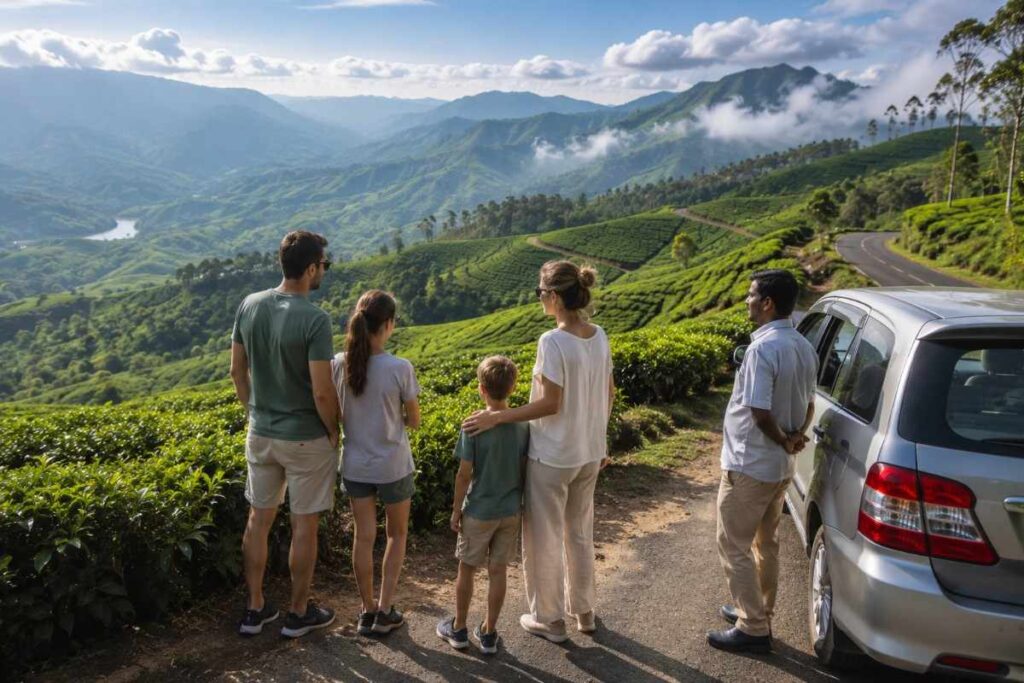
Most tea gardens sit outside the main town. A hired car or taxi is the practical way to move between them in a single day. Roads to estates like Kolukkumalai are unpaved and steep, so a proper jeep is required rather than a standard sedan.
If you are traveling solo or with family across unfamiliar hill roads, read our India travel safety guide before you set out.
How foreign tourists pay for entry fees and shopping in Munnar
Most tea garden entry is free. Guided walks, factory tours, and jeep safaris usually charge a fee collected in cash at the counter. Tea shops and estate outlets increasingly accept card and UPI payments, though smaller counters still expect physical rupees.
Foreign tourists cannot legally bring Indian rupees into the country. Downloading a UPI wallet before your trip can save time, but activation can only be completed after you arrive in India. Once activated, it makes paying exact amounts at tea estates, cafés, and shops much easier, without relying entirely on cash.
Airport money changers add roughly an 8% to 9% markup over the bank rate. ATMs from SBI, HDFC, ICICI, or Axis Bank apply the Visa or Mastercard network rate, about 1% to 2% above interbank.
Your home bank adds a fixed fee of Rs 200 to Rs 335 (approx $2 to $3.5). A foreign transaction charge of 1% to 3% also applies on top of this.
If you want the full walkthrough, the guide on how UPI works for foreign travelers in India covers every step.
What to pack for a Munnar tea garden visit
Pack light layers, since mornings and evenings turn noticeably cooler than midday. A light jacket or fleece works well for sunrise visits to Kolukkumalai. Comfortable walking shoes matter more than style on the uneven estate paths.
Carry sunscreen and a hat, since the hill sun can be sharper than it feels. A reusable water bottle helps on longer stake walks and jeep safaris. Keep a small daypack for tea purchases and a light rain jacket during shoulder season.
Souvenirs and tea shopping in Munnar
Estate outlets sell loose-leaf tea, tea bags, and gift tins at reasonable prices. Prices per kilogram vary widely, from basic blends to premium high-altitude varieties. Comparing two or three outlets before buying often turns up better rates.
Most estate shops accept cash, cards, and UPI payments for tea purchases. Smaller roadside stalls near the estates may still expect exact cash. Keeping small notes ready speeds up these quick transactions.
Ask for a tasting before committing to a larger tin, since flavor varies by estate and altitude. A 250-gram pack travels well and makes an easy gift to bring home.
How much should I budget for a Munnar tea garden day

A single estate visit with a guided walk typically runs Rs 700 to Rs 1,300 per person (approx $7 to $14). Lockhart’s entry rate runs at Rs 250 for everyone (approx $3). Add a jeep safari to Kolukkumalai, tea purchases, and a car rental for the day.
Costs stack up quickly across a full circuit. Before you map out a multi-day Kerala trip, it helps to plan your India travel budget. This way estate fees, transport, and food do not surprise you halfway through the trip.
Practical tips before you go
Carry Rs 5,000 to 10,000 (approx. $52 to $104) in cash for the day. This covers entry fees, small tea purchases, and local transport where cards are not accepted. Many vendors may also refuse damaged, torn, or heavily soiled banknotes, so carry clean, undamaged currency to avoid payment issues.
Wear layers, since Munnar’s hill climate runs noticeably cooler than the Kerala coast, especially early morning. Book guided treks and jeep safaris a day in advance during peak season, since slots at popular estates fill up fast.
Conclusion
Munnar’s tea gardens reward a little planning more than a rushed checklist of stops. Pick two or three estates that match your pace, whether that is Kolukkumalai’s sunrise trek or Pallivasal’s quiet walk. Keep both cash and a working payment method on hand so entry counters and tea shops never slow you down. Read on for more ways to make the rest of your India trip just as smooth.
FAQs
1. Which is the highest tea estate in Munnar?
Kolukkumalai Tea Estate sits at 7,900 feet, making it the highest tea plantation in the world.
2. Do Munnar tea gardens charge entry fees?
Most gardens allow free roadside viewing, but guided walks and factory tours usually cost Rs 700 to Rs 1,300 per person (approx $7 to $14).
3. What is the best season to visit Munnar tea gardens?
September through March offers the clearest skies and greenest landscape, right after monsoon season ends.
4. Can I visit Munnar tea gardens in one day?
Yes, two to three estates fit comfortably in a single day with a hired car and an early start.
5. Do tea estates in Munnar accept card payments?
Many estate outlets and cafes now accept cards or UPI, though smaller counters still prefer cash.
6. How much cash should I carry in Munnar?
Foreign travelers should carry roughly Rs 5,000 to 10,000 (approx $52 to $104) for entry fees, tea, and transport.
7. How much does the Kolukkumalai jeep safari cost?
Jeep safari pricing varies by operator and season, so confirm the current rate with your driver or estate before booking.
8. What are the Tata Tea Museum timings?
The museum typically operates from 9 AM to 5 PM and stays closed on Mondays.
9. What is the nearest airport to Munnar?
Cochin International Airport is the closest major airport, roughly a four-hour drive from Munnar.
10. Is one day enough for Munnar’s tea gardens?
One day covers the highlights, but two days let you add Kolukkumalai’s sunrise trek without rushing other estates.
“CheqUPI turns your card into a UPI-ready wallet, free to join, with 0% fees at every merchant. Scan and pay at Munnar’s tea estates without hunting for an ATM. Download CheqUPI and start paying by UPI in Munnar.”