Introduction
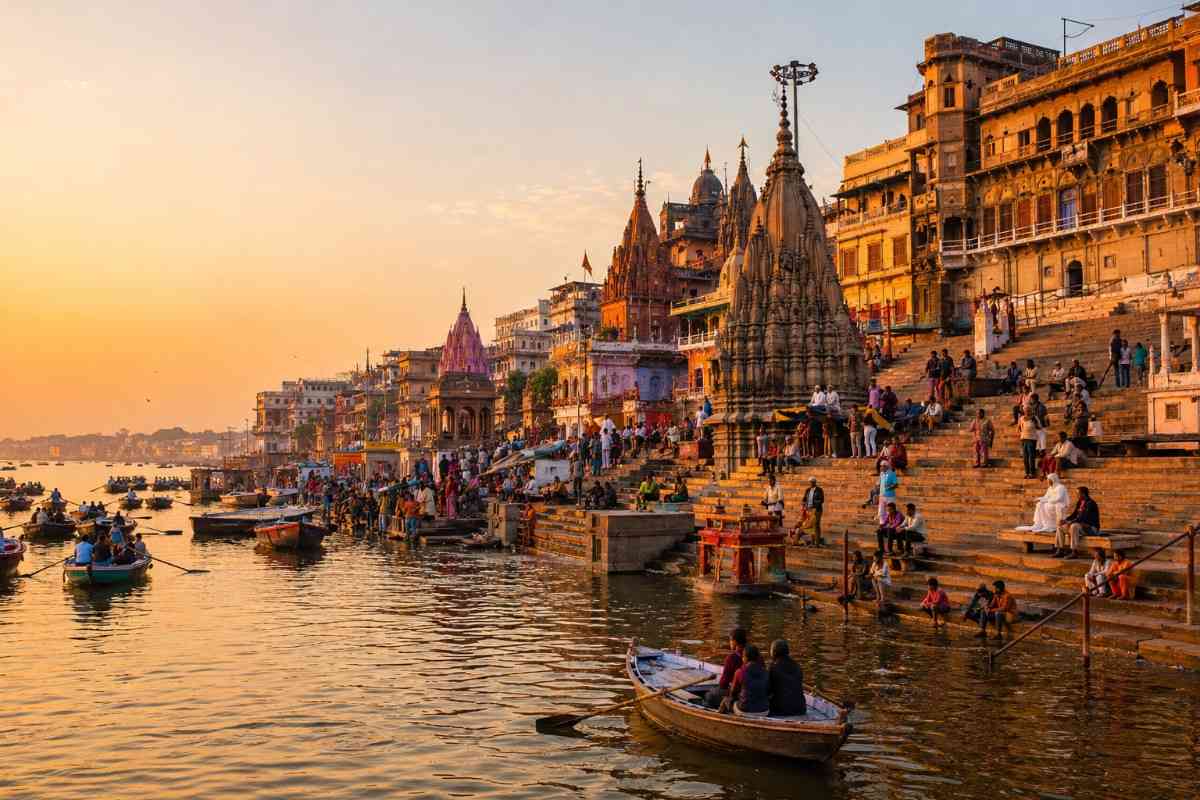
Varanasi is the kind of place people tell you about for years before you actually go. The ghats at dawn, the boat ride on the Ganges, and the Ganga Aarti in the evening. What they usually forget to mention is the practical side: where to be and at what time, how much things actually cost, and how to pay when most of the city runs on QR codes that your foreign card cannot touch.
You will find out which ghats to visit and when, what a sunrise boat ride costs, how the Ganga Aarti works, what Varanasi costs on a daily budget, and how to pay cashlessly from the moment you arrive.
Key highlights
- Varanasi has 84 ghats stretching roughly 6.5 km along the western bank of the Ganges
- Arriving at Assi Ghat between 4:30 and 5 AM gives you the quietest, most atmospheric experience
- A shared sunrise boat ride costs Rs 200 to Rs 400 per person for 60 to 90 minutes
- The evening Ganga Aarti at Dashashwamedh Ghat starts around 7 PM and is free to attend
- CheqUPI is free to join for all eligible nationalities. The wallet loading fee is 2.95% + applicable taxes for all foreign users. There are no transaction fees when paying merchants through UPI.
- Your daily spending cap on a CheqUPI wallet is Rs 1,00,000 ($1,060)
What is UPI and why does it matter in Varanasi?
UPI is India’s instant payment system, run by the National Payments Corporation of India (NPCI). When a merchant shows you a QR code, the payment moves from bank to bank in seconds, with no card network involved.
Card machines are expensive, and most vendors in India never bother with them. Boatmen, tea stalls, rickshaw drivers, and dhaba kitchens all use QR codes. Your foreign Visa or Mastercard has no connection to that system, so payment fails at the point of scan.
On a tourist visa, you cannot open an Indian bank account, which means standard apps like PhonePe and Google Pay will not work for you either. A prepaid UPI wallet solves this. You load it with your international card and pay any merchant QR code across India. Read our UPI guide for foreign travellers for the full setup process.
The ghats of Varanasi
The ghats are stone steps running down to the Ganges along the western bank. There are 84 in total, each with its own character. Some are for bathing and prayer. Some for cremation. Walking the full length takes about two hours and shows you the full range of life along the river.
Assi Ghat
Assi Ghat is at the southern end of the strip and hosts the Subah-e-Banaras, a short sunrise aarti that most travel guides overlook. Arriving by 4:45 AM puts you on the steps before the ceremony begins. After the aarti, take a boat heading north. The light between 5:30 and 6:30 AM changes quickly and the view from the water looking back at the city is what most people carry home from Varanasi.
Dashashwamedh Ghat
This is the main ghat and the most visited. The evening Ganga Aarti here draws hundreds of devotees and visitors every night. Priests perform a 45-minute ritual with oil lamps, incense, and conch shells starting around 7 PM. Arrive by 6:30 PM for a good spot on the steps or hire a boat for an unobstructed view from the river.
Manikarnika Ghat
Manikarnika is Varanasi’s main cremation ghat. It burns continuously, every hour of every day. Photography is strictly prohibited here and that rule is enforced seriously. Watch from the water or from the steps further back. Do not let anyone pressure you into paid rooftop viewings or large donations.
The sunrise boat ride
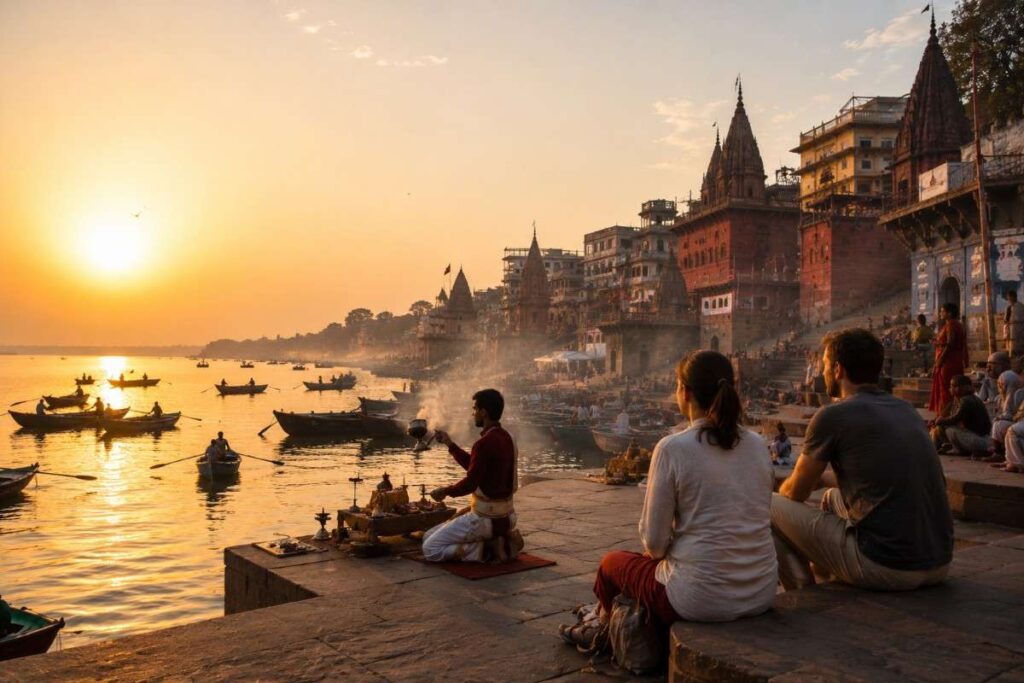
A sunrise boat ride on the Ganges is the best Rs 200 to Rs 400 you will spend in India. You sit on the river as the city wakes up behind you. Priests light lamps. Pilgrims enter the water. The light between 5:30 and 6:30 AM shifts from grey to gold. Agree on the price and duration before you get in.
| Boat type | Duration | Cost (INR) | Cost (USD approx) |
| Shared sunrise boat | 60 to 90 mins | Rs 200 to 400 per person | $2 to $4 |
| Private boat, 2 to 4 people | 60 to 90 mins | Rs 800 to 1,500 total | $8 to $16 |
| Guided tour with English-speaking guide | 2 hours | Rs 1,500 to 2,500 per person | $16 to $26 |
Note: Prices above are estimates for June 2026 and include the standard sunrise surcharge. Festival periods such as Dev Deepawali in November push rates higher. Prices vary by season and operator. Verify directly with your boatman before boarding. Always check the latest rates before you travel.
Best time to visit Varanasi
October to March is the right window for most foreign travellers. Mornings are cool, skies are clear, and the ghats are at their most atmospheric. This is also peak season, so accommodation costs more and the main ghats get crowded by mid-morning.
April to June is very hot, with temperatures regularly hitting 40 to 45 degrees Celsius. July to September brings monsoon rains. The river swells and some lower ghat steps go underwater. Dev Deepawali in November, when the ghats are lit with hundreds of thousands of oil lamps, is one of the most spectacular festivals in India. Book accommodation months ahead if you plan to attend.
How to pay in Varanasi as a foreign traveller
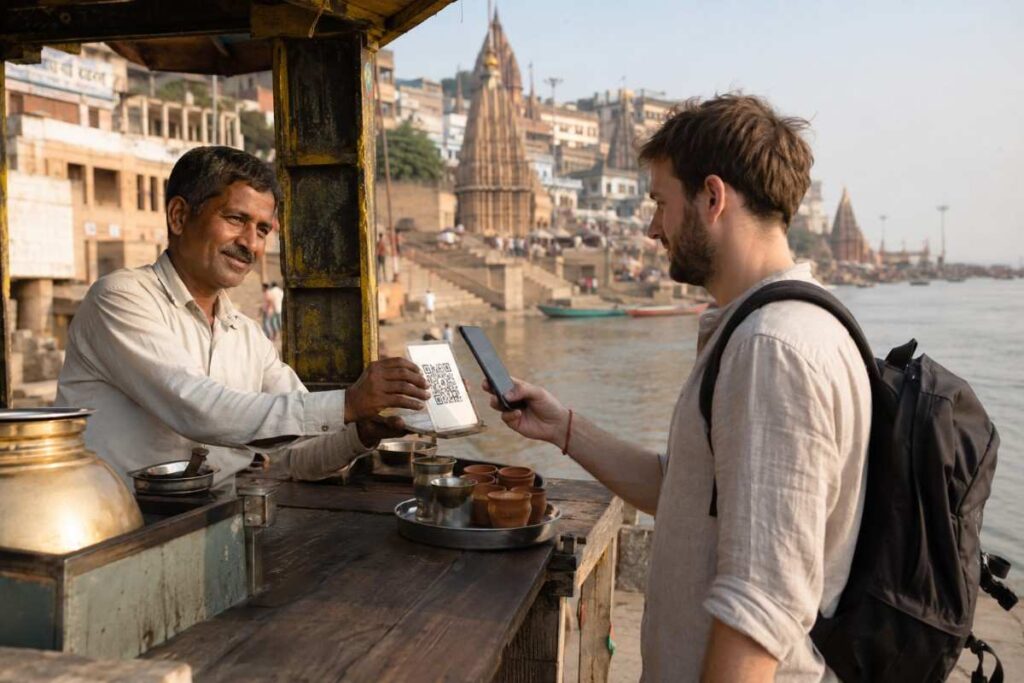
Most guesthouses near the ghats, established dhabas, auto-rickshaw drivers, and boat hirers now use UPI QR codes. Your foreign card cannot access that system. You need a prepaid UPI wallet.
CheqUPI is an RBI-licensed prepaid wallet built for exactly this situation. Backed by Y Combinator (W22), it runs on Transcorp International’s PPI and AD Cat-II licence through the UPI One World network. You load it from your international card and pay any merchant QR code the way a local does.
CheqUPI is for paying registered merchants (P2M). P2P transfers are not supported under RBI regulations. After arriving in India, a quick verification step activates your wallet in 5 to 10 minutes. CheqUPI has branches across India. Check CheqUPI for current locations before you travel.
Varanasi daily budget
Varanasi is one of India’s most affordable cities. The ghats are free. The Ganga Aarti is free. A shared boat ride costs Rs 200 to Rs 400. The biggest daily expense for most visitors is accommodation.
| Category | Budget | Mid-range | Splurge |
| Accommodation per night | Rs 600 to 1,500 ($6 to $16) | Rs 2,000 to 4,500 ($21 to $48) | Rs 6,000 to 12,000 ($64 to $128) |
| Food per day, 3 meals | Rs 300 to 600 ($3 to $6) | Rs 800 to 1,600 ($8 to $17) | Rs 2,500 and above ($26 and above) |
| Boat ride | Rs 200 to 400 ($2 to $4) | Rs 800 to 1,500 ($8 to $16) | Rs 2,500 and above ($26 and above) |
| Local transport per day | Rs 150 to 300 ($2 to $3) | Rs 400 to 800 ($4 to $8) | Rs 1,200 and above ($13 and above) |
| Daily total | Rs 1,250 to 2,800 ($13 to $30) | Rs 4,000 to 8,400 ($43 to $89) | Rs 12,200 and above ($130 and above) |
Note: All figures are estimates for June 2026. Accommodation prices rise sharply during Dev Deepawali in November and Makar Sankranti in January. Prices vary by season and operator. Verify directly before booking. USD conversions are approximate at Rs 94 to $1. Always check for the latest rates before you travel.
For a full breakdown of what your India trip is likely to cost, read our India travel budget guide.
Is Varanasi safe for foreign travellers
Varanasi is safe. The ghat area is busy at all hours. The main friction you will encounter is persistent overpricing rather than danger. Boatmen, auto drivers, and silk traders quote high to foreign visitors. A calm and firm no, followed by walking away, resolves most of these situations quickly.
Agree on all fares before you commit. Use Ola or Uber where available, or fix auto prices before getting in. For pre-dawn journeys to the ghats, arrange your ride the evening before and agree on the fare then. For broader safety advice across your India itinerary, read our India safety guide.
Conclusion
The ghats at dawn cost almost nothing. A shared boat costs Rs 200 to Rs 400. Both the morning aarti at Assi and the evening Ganga Aarti at Dashashwamedh are free. Varanasi asks very little of your budget and a great deal of your attention. Sort your cash and your CheqUPI wallet before you arrive, so the only thing on your mind when those bells start is the light on the water.
Frequently asked questions
- What time should I arrive at the Varanasi ghats for sunrise?
Arrive at Assi Ghat between 4:30 and 4:45 AM. The Subah-e-Banaras morning aarti begins before dawn. Getting there early gives you a front-row spot on the steps before the crowd builds. - Which ghat is best for watching the sunrise in Varanasi?
Assi Ghat is the best for sunrise. It hosts a morning aarti, the crowd is calmer than Dashashwamedh, and a boat north of there shows you the full ghat strip as the light comes up. - How much does a sunrise boat ride in Varanasi cost?
Shared boats cost Rs 200 to Rs 400 per person for 60 to 90 minutes. Private boats for 2 to 4 people cost Rs 800 to Rs 1,500 total. Sunrise hours carry a 30 to 40 percent surcharge. Always agree on the fare before you board. - What time does the Ganga Aarti start in Varanasi?
The evening Ganga Aarti at Dashashwamedh Ghat starts around 7 PM and runs for about 45 minutes. Arrive by 6:30 PM for a good spot. Entry is free for everyone. - Can foreign travellers use UPI payments in Varanasi?
Yes, at most guesthouses, restaurants, and established operators. Your foreign card will not work at UPI QR codes. Use a prepaid wallet like CheqUPI and carry Rs 5000 to Rs 10,000 in cash for small vendors and boat rides. Read our UPI guide for setup steps. - Is photography allowed at Manikarnika Ghat?
No. Photography is strictly prohibited at Manikarnika, the main cremation ghat. This applies to phones and cameras equally. Watch from a respectful distance on the river or from the steps further back. - How many days do I need in Varanasi?
Two days cover the dawn ghats, a sunrise boat ride, the evening Ganga Aarti, and a walk through the old city lanes. A third day allows for a visit to Sarnath, 10 km from the city, where the Buddha gave his first sermon. - Is Varanasi safe for solo foreign travellers?
Yes. The main ghat area is busy at all hours. The main issue is overpricing rather than physical danger. Avoid empty lanes late at night, use app-based rides for late pickups, and agree on all fares before committing. - What are the spending limits on a CheqUPI wallet?
You can spend up to Rs 1,00,000 ($1,060) per day and Rs 3,00,000 ($3,170) per month, and 10 transactions per day. For your first 24 hours after your first transaction, a temporary cap of Rs 50,000 and 5 transactions. - What happens to my CheqUPI wallet when my Indian visa expires?
Under RBI rules, your wallet will be frozen upon visa expiry until a new visa is provided. Any unused wallet balance can be refunded at any time as per your request, to your international card upon account closure or visa expiry.
“India’s UPI network works across every city, market, and ghat on your itinerary.
Download CheqUPI. Activate your wallet after arriving in India and start paying with UPI in minutes.”