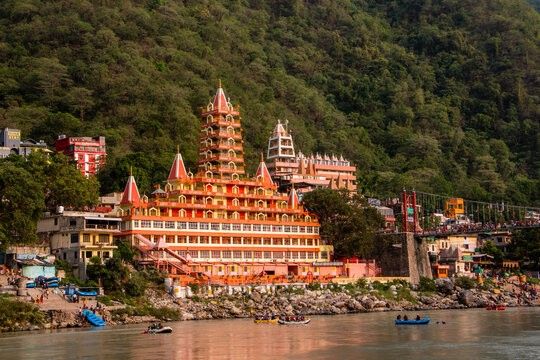
Rishikesh is not the quiet hillside retreat most foreign tourists picture. It has packed ashram schedules, rafting seasons on the Ganga, rooftop cafes buzzing with travellers from across the world, and a street food scene that runs entirely on QR codes.
The spiritual and the adventurous sit side by side here in a way that surprises almost every first-time visitor.Yoga retreats, river rapids, top places to visit, and how to actually pay for all of it as a foreign tourist. Everything you need is right here.
Key highlights
- Rishikesh sits at 356 metres above sea level in the Himalayan foothills of Uttarakhand, roughly 240 km from Delhi.
- It is recognised as the yoga capital of the world, with over 100 ashrams offering classes, residential programmes, and teacher training courses.
- White water rafting on the Ganga runs from September to June across three main stretches, with prices starting at around Rs 600 to 3500 (approx $6 to $37) per person.
- Jumpin Heights near Mohan Chatti runs India’s highest commercial bungee jump at 83 metres.
- Rishikesh is a strict alcohol and meat-free zone. Both are prohibited within city limits.
- Most merchants, from street food stalls to rafting operators, accept UPI QR payments. Foreign tourists can access UPI through an RBI-licensed wallet like CheqUPI without needing an Indian bank account.
Why Rishikesh draws yoga travellers from around the world
Rishikesh is not a wellness resort. It is the place where modern yoga as a global practice took root, and the teaching lineages here go back generations. For serious practitioners, it is less a destination and more a pilgrimage.
Ashrams worth knowing
Parmarth Niketan on the banks of the Ganga is the largest ashram in Rishikesh and the most accessible for foreign visitors. It runs daily yoga sessions, meditation classes, and Ayurvedic consultations open to walk-in visitors. The evening Ganga aarti here, held at the river’s edge with lamps and chanting, is one of the most powerful experiences in the city and is completely free to attend.
Sivananda Ashram follows a structured daily schedule built around the five points of yoga, covering exercise, breathing, relaxation, diet, and meditation. Phool Chatti Ashram, set a few kilometres upstream, offers a quieter, more immersive residential experience away from the busier parts of town.
Drop-in yoga vs. residential retreats
Drop-in classes are widely available across Tapovan and Laxman Jhula. A single session at most studios costs Rs 300 to Rs 600(approx $3 to $6.5). Residential retreats at established ashrams run anywhere from Rs 800 to Rs 2,500(approx $8 to $27) per night, often including accommodation, meals, and daily classes. Teacher training courses, typically 200-hour programmes, range from Rs 40,000 to Rs 1,20,000(approx $424 to $1272) for a month, depending on the ashram and accommodation standard. Book residential programmes at least two to four weeks ahead, especially between October and March when demand from foreign tourists peaks.
Top places to visit in Rishikesh
Rishikesh is compact enough to cover on foot, though the two sides of the river are connected by suspension bridges rather than roads in the older parts of town.
Laxman Jhula and Ram Jhula
These two suspension bridges over the Ganga are the visual symbol of Rishikesh. Laxman Jhula, built in 1929, is narrower and more atmospheric. Ram Jhula is wider and sits closer to the main ashram cluster. Both are free to cross and worth doing at sunrise before the crowds arrive.
Triveni Ghat and the evening aarti
Triveni Ghat is the main bathing ghat and the site of Rishikesh’s evening aarti ceremony. The ceremony runs daily at sunset and draws hundreds of locals and visitors. Arrive by 5:30 PM to get a spot near the front. On weekends and festival days, arrive significantly earlier.
The Beatles Ashram
Officially called Chaurasi Kutia, this is the ashram where The Beatles stayed in 1968 to study Transcendental Meditation with Maharishi Mahesh Yogi. It is now an atmospheric abandoned complex covered in large-scale murals and open for visitors. Entry costs Rs 150(approx $1.6)for foreign nationals. It is one of the most photogenic spots in Uttarakhand and far less crowded in the early morning.
Neer Garh Waterfall
A 1.5 km trail from Laxman Jhula leads to this two-tiered waterfall set in dense forest above the town. The natural pool at the base is cool and clean. Go before 9 AM to have it largely to yourself. The trail is straightforward, but wear shoes with grip as some sections get slippery.
Adventure activities for foreign tourists
Rishikesh holds a reputation as India’s adventure capital that it earns every season. The Ganga rapids, the bungee platform, and the riverside camps together draw a different kind of traveller alongside the yoga crowd, and both groups tend to find the other surprisingly good company.
White water rafting
The Ganga between Shivpuri and Rishikesh covers 16 km of Grade III and Grade IV rapids, with names like Roller Coaster, Golf Course, and Club House. No prior experience is needed. Guides handle the technical work and safety equipment is provided on every licensed run.
| Stretch | Distance | Grade | Approx. price per person |
| Brahmapuri to Rishikesh | 9 km | I to II | Rs 600 to Rs 900(approx $6.30 to $9.45) |
| Shivpuri to Rishikesh | 16 km | III to IV | Rs 1,000 to Rs 1,500(approx $11 to $16) |
| Marine Drive to Rishikesh | 24 km | III to IV | Rs 1,500 to Rs 2,000(approx $16 to $22) |
Note: Fees may vary. Prices are approximate and vary by season and operator. Book through licensed operators only.
The best rafting months are September to November and March to May. Monsoon shuts the river down entirely due to dangerous water levels. Morning slots run calmer water and suit first-timers better.
Bungee jumping
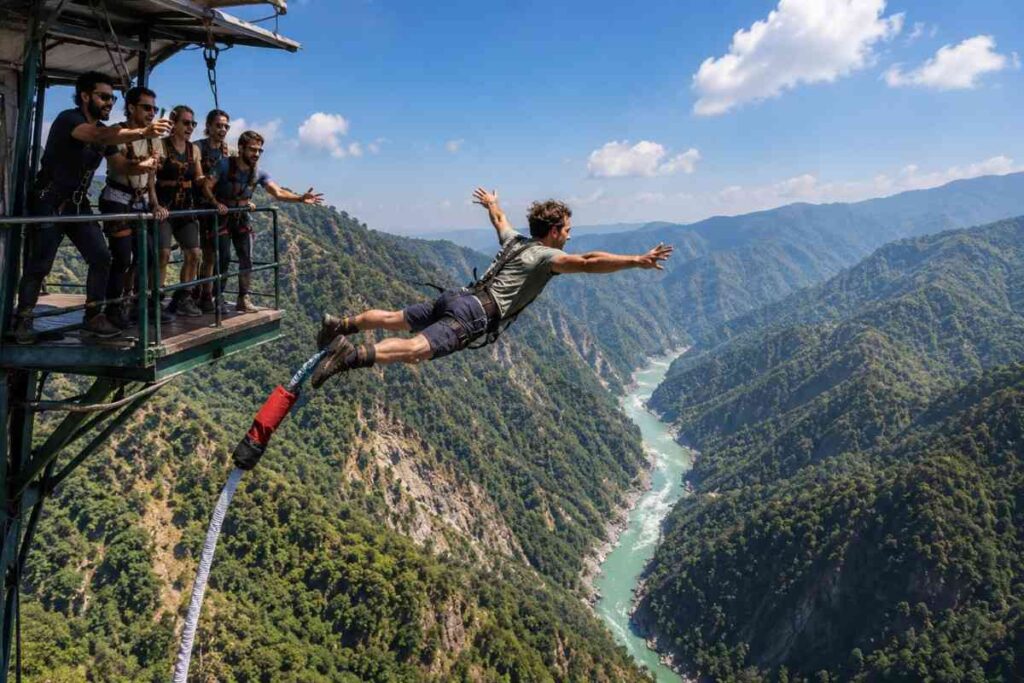
The platform at Jumpin Heights near Mohan Chatti is India’s highest commercial bungee at 83 metres. The equipment is imported from New Zealand, and the operation meets international safety standards. A giant swing and flying fox are also available at the same site. Book your slot online. Walk-ins on weekends face waits of two to three hours.
Camping by the Ganga
Riverside camps between Shivpuri and Ghattughat are fully equipped with proper tents, beds, attached bathrooms, and bonfire areas. This is not rough camping. Most operators offer combo packages including one night’s stay, rafting, and meals for Rs 1,500 to Rs 3,000(approx $16 to $32) per person. Choose camps set back 500 metres or more from the highway for better river views and quieter nights. November to March nights drop cold, so pack a warm layer even if the days feel mild.
Best time to visit Rishikesh
Rishikesh works year-round but the experience shifts considerably by season.
October to February is the best window for yoga travellers. The weather is cool and clear, ashrams are fully operational, and the town has a calm, focused energy. Nights drop to near zero in December and January, so pack accordingly.
March to June suits adventure seekers. Rafting is at its peak, temperatures are warm, and the trails above town are open. The Neer Garh Waterfall trail and the Kunjapuri sunrise trek are both at their best in this window.
July to September is monsoon. Rafting closes due to unsafe river levels. The hills turn dramatically green and the waterfalls run full. Some travellers love this version of Rishikesh; most find the activity limitations frustrating. If your primary goal is rafting or a specific yoga programme, avoid the monsoon months.
How to get to Rishikesh
Rishikesh is well connected from Delhi and the major northern Indian cities.
By air, the nearest airport is Jolly Grant Airport in Dehradun, roughly 15 km from Rishikesh. It has regular flights from Delhi, Mumbai, and Bengaluru. A prepaid taxi from the airport to Rishikesh takes around 30 to 40 minutes and costs Rs 600 to Rs 900(approx $6 to $10).
By train, the nearest major railway station is Haridwar, 25 km away. Frequent trains connect Haridwar to Delhi, Varanasi, and Lucknow. From Haridwar, shared autos and buses to Rishikesh cost Rs 50 to Rs 150(approx $0.5 to $1.5) per person, or a private taxi runs Rs 500 to Rs 700(approx $5 to $7.5).
By road from Delhi, Rishikesh is approximately 240 km via NH334, a journey of six to seven hours by car or bus. State-run buses cost Rs 350 to Rs 500(approx $3.8 to $5.5). Private Volvo coaches offer a more comfortable option. Leave Delhi by 5 AM to avoid traffic near Meerut and Haridwar.
How to pay in Rishikesh as a foreign tourist
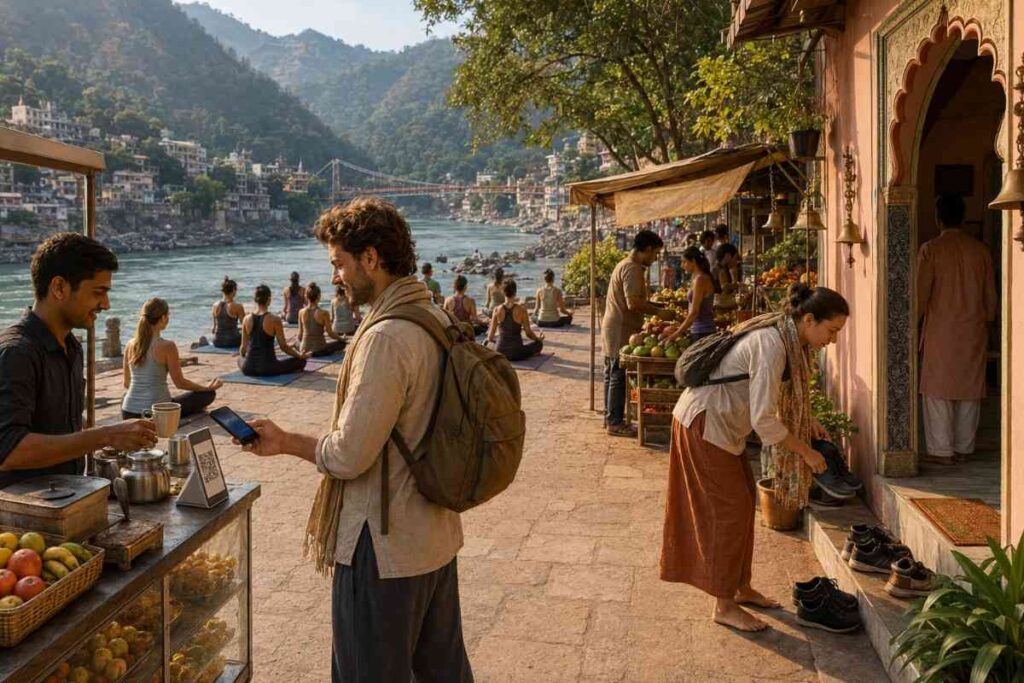
This is the practical gap that almost every Rishikesh guide ignores, and it is one of the most important things to sort out before you arrive.
Why cash alone is not enough
Rishikesh runs on UPI. From rafting operators and ashram canteens to waterfall trail tea stalls and shops around the Lakshman Jhula area, most vendors display a QR code and expect digital payment. Finding change for Rs 500 notes is a persistent problem. ATM queues in tourist season can be long. Relying entirely on cash creates friction at dozens of small transactions every day.
How CheqUPI works in Rishikesh
CheqUPI is an RBI-licensed Prepaid Payment Instrument (PPI) built specifically for foreign tourists and NRIs. You load it using your international credit or debit card, receive a UPI ID, and then scan and pay at any of India’s 55 million+ UPI merchants, including the vast majority of vendors in Rishikesh.
The loading fee is 2.95% + applicable taxes for all foreign users.On a Rs 15,000 top-up, that comes to roughly Rs 530. Every merchant payment via UPI after that costs zero. CheqUPI is free to join for tourists from 180+ FATF-compliant countries worldwide.
For a full walkthrough of how UPI works in India for foreign tourists, see our complete UPI guide. For tips on keeping your money safe while travelling, see our safety guide for tourists.
Rishikesh travel tips for foreign tourists
Rishikesh operates under rules that differ from most Indian tourist destinations. Knowing them before you arrive saves awkward moments.
Rishikesh is a strict alcohol and meat-free zone. Both are completely prohibited within city limits under the Uttarakhand state law. Most restaurants and cafes serve vegetarian food only.
Dress modestly near ashrams and ghats. Shoulders and knees covered is the standard. Many ashrams will turn visitors away at the gate if they arrive in beachwear or sleeveless tops.
Book rafting only through licensed operators. Look for operators who display their licence from the Uttarakhand Tourism Development Board. Unlicensed operators sometimes cut corners on safety equipment.
Get a local SIM if you plan to stay more than a few days. Airtel and Jio both cover Rishikesh well. International roaming rates make daily navigation and UPI top-ups expensive without one.
Keep Rs 100 to Rs 500 in small notes for very remote vendors, temple donation boxes, and the occasional driver who genuinely does not have a QR code. These situations are becoming rarer, but they still exist.
Conclusion
Rishikesh rewards travellers who arrive prepared. The yoga is serious, the rafting is genuinely thrilling, and the town has an energy that holds both without contradiction. Sort your payments before you land, respect the rules of the space, and Rishikesh will give you more than you planned for.
FAQs
What is the best time to visit Rishikesh for yoga?
October to February. The weather is cool, ashrams run full schedules, and the town has a calm focus that suits yoga and meditation well.
Is Rishikesh safe for solo foreign tourists?
Yes. Rishikesh is one of the safest destinations in India for solo travellers, including solo women. Stick to well-lit areas after dark and use licensed operators for all activities.
How much does a yoga retreat in Rishikesh cost?
Residential retreats start at Rs 800 to Rs 2,500(approx $8.5 to $27) per night, including accommodation and classes. Month-long teacher training programmes range from Rs 40,000 to Rs 1,20,000(approx $424 to $1272) depending on the ashram.
Can foreign tourists use UPI to pay in Rishikesh?
Yes. Through an RBI-licensed UPI wallet like CheqUPI, foreign tourists can load funds using an international card and pay any UPI merchant in Rishikesh by scanning a QR code.
What are the best things to do in Rishikesh for foreign tourists?
White water rafting on the Ganga, morning yoga at Parmarth Niketan, crossing Laxman Jhula at sunrise, visiting the Beatles Ashram, and attending the evening Ganga aarti at Triveni Ghat.
How do I get to Rishikesh from Delhi?
By road, it is 240 km, around six to seven hours. By train, travel to Haridwar and take a shared auto or taxi for the final 25 km. By air, fly to Jolly Grant Airport in Dehradun, then take a taxi.
What is the cashless payment option for foreign tourists in Rishikesh?
CheqUPI is an RBI-licensed UPI wallet that lets foreign tourists pay at any QR-code merchant without an Indian bank account. Load it via your international card after arriving.
What adventure activities are available in Rishikesh?
White water rafting, bungee jumping at 83 metres at Jumpin Heights, riverside camping, flying fox, and trekking to Neer Garh Waterfall and Kunjapuri Temple.
Is Rishikesh a cashless city?
Not entirely, but the majority of merchants now accept UPI QR payments. Cash is still useful for very small vendors and temple donations. A UPI wallet covers most daily spending.
What should foreign tourists not do in Rishikesh?
Do not carry or consume alcohol or non-vegetarian food in the city. Do not wear revealing clothing near temples and ashrams. Do not book rafting through unlicensed operators.
“Rishikesh runs on QR codes, not cash. Every chai stall, rafting operator, and ashram canteen you want to visit is one scan away once your UPI wallet is set up. Do not spend your first day in the yoga capital fumbling for change.Download CheqUPI. Activate your wallet after arriving in India and start paying with UPI in minutes. ”