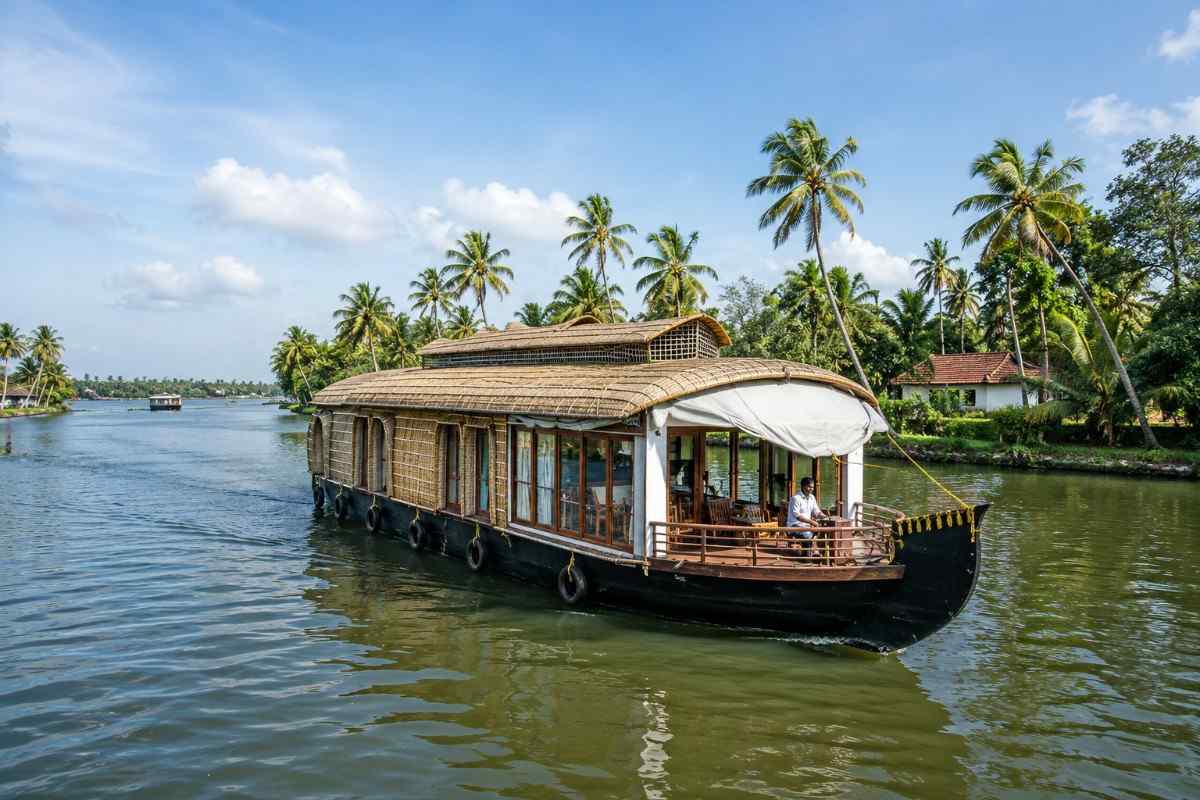
Kerala’s backwaters look like the easiest trip you will ever take in India. A houseboat, a lake, a coconut tree, and a sunset. What nobody tells you is the choice paralysis of 2,000 houseboats, sparse ATMs once you leave the main towns, and four regions that each feel completely different from each other.
The right region, the right houseboat, the best things to do beyond the cruise, and exactly how to handle money in one of India’s most beautiful and least card-friendly destinations.
Key highlights
- The Kerala backwaters are a 900 km network of lagoons, canals, and lakes running parallel to the Arabian Sea, fed by 38 rivers and stretching from Kochi in the north to Kollam in the south.
- Alleppey is the most popular base for houseboat cruises, with over 2,000 kettuvallam houseboats operating on the waterways.
- Kerala Tourism classifies houseboats into platinum, gold, and silver categories. Budget houseboats start at around Rs 6,000 to 8,000 (approx. $64 to $85) per night, and premium options run Rs 25,000 (approx $265) and above.
- The Kollam to Alleppey public ferry covers 8 hours of backwater scenery for around Rs 400 to 600 (approx $4 to $6.5), one of the best-value travel experiences in India.
- UPI payments work widely in Alleppey town, Kumarakom, and Kochi. On-water and village vendors are largely cash-only. Foreign tourists can use CheqUPI for town spending without an Indian bank account.
- November to February is the best window for foreign tourists. The monsoon runs from June to September and disrupts most houseboat operations.
What are the Kerala backwaters?
The backwaters are not a single lake or a tourist attraction built for visitors. They are a working network of brackish lagoons, canals, rivers, and lakes that locals have used for transport, fishing, and farming for centuries. Kids still commute to school by boat in some villages. Vegetables move by canoe. Entire communities live on narrow strips of land between two bodies of water.
The network spans more than 900 km along the Malabar Coast. It is fed by 38 rivers and includes five major lakes connected by both natural and man-made canals. Kuttanad, the rice bowl of Kerala, is one of the few farming regions in the world where cultivation happens below sea level. When you cruise the backwaters, you are moving through a living landscape, not a theme park.
Best regions for foreign tourists
Where you base yourself determines the entire character of your backwater experience. The most common mistake is treating Alleppey as the only option.
Alleppey (Alappuzha)
Alleppey is the busiest and most accessible backwater hub, 1.5 hours from Kochi by road. It has the widest range of houseboat operators, the most accommodation options at every price point, and the easiest connectivity from major airports. The trade-off is crowds on the main Vembanad Lake routes during peak season from December to January. Ask your operator for routes through Champakulam or Kainakary instead of the standard Punnamada loop. The scenery is quieter and the price is the same.
Kumarakom
Kumarakom sits on the eastern shore of Vembanad Lake and draws a slightly different crowd. Fewer houseboats, more resorts, and the Kumarakom Bird Sanctuary on the doorstep. Sunsets over the lake here are genuinely better than Alleppey. It suits couples and travelers who want a slower, more resort-oriented experience. Budget options are harder to find; Kumarakom skews toward the premium end of the market.
Kollam and the public ferry route
The Kollam to Alleppey public ferry, operated by the District Tourism Promotion Council, covers 8 hours of backwater scenery for around Rs 400 to 600 (approx $4.20 to $6.50). Most foreign tourists do not know it exists. It passes through narrow village canals, open lakes, and working fishing settlements that houseboats on the main routes never reach. If you have one day and a limited budget, this is the single best-value backwater experience in Kerala.
Kasaragod and the quieter north
Kasaragod, three hours from Mangalore airport, is for repeat visitors and travelers who find Alleppey too commercial. Smaller boats, no crowds, and real fishing villages that have not yet been shaped by tourism. It is harder to reach, which is exactly why it is still worth reaching.
How to pick a houseboat without getting burned
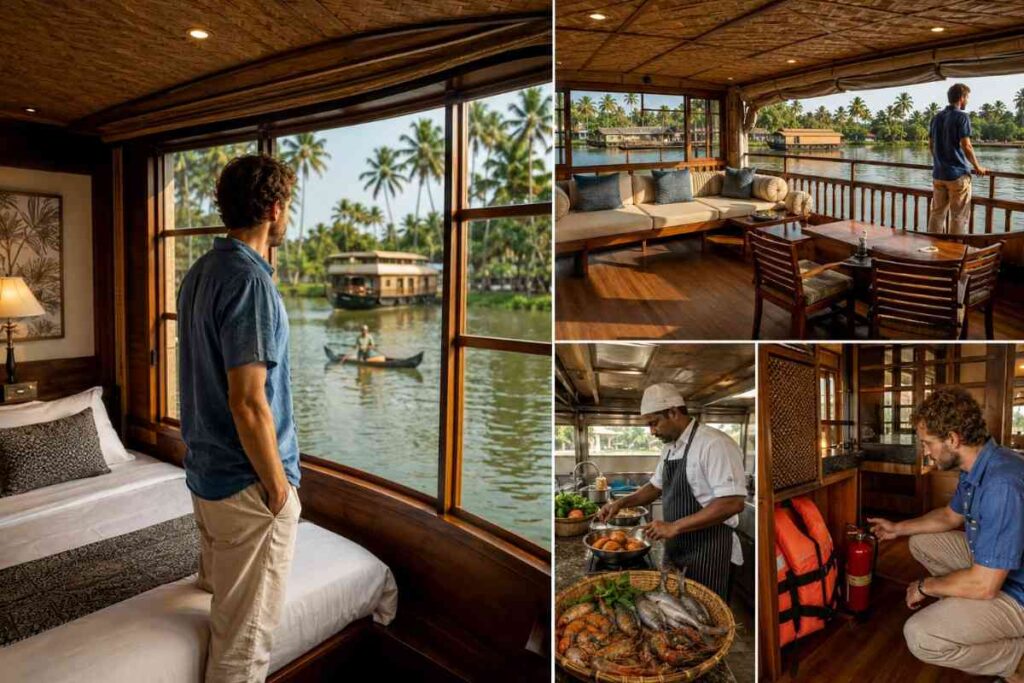
Houseboat marketing in Alleppey is enthusiastic and frequently misleading. Knowing how the classification system works saves money and avoids disappointment.
Kerala Tourism’s classification system
Kerala Tourism officially classifies tourist houseboats as platinum, gold, and silver. Platinum boats meet the highest standards for construction, safety equipment, crew certification, and environmental compliance, including waste management systems. Gold and silver offer progressively fewer guarantees. Always ask an operator for their Kerala Tourism classification certificate before booking. Operators who cannot produce one are worth avoiding.
What the price difference actually buys you
Budget houseboats start at around Rs 6,000 to Rs 8,000 (approx $64 to $85) per night for two people. Premium options run Rs 12,000 to Rs 25,000 (approx $127 to $265) and above. The gap between price tiers shows up in three places: air conditioning that actually maintains a comfortable temperature, food that is freshly cooked on board rather than reheated, and a captain who knows the quieter routes rather than following the standard tourist loop. Spend on crew quality and food. The gold-painted exterior of a boat tells you nothing useful.
Things to check before booking
Confirm where the houseboat anchors for the night, as Kerala regulations require all houseboats to stop cruising after about 5:30 PM or 6:00 PM. Ask whether meals are cooked fresh on board and life jackets are available for every passenger, and check recent reviews for food quality and overall service. Plan to board by noon to enjoy the maximum cruising time before the boat anchors for the evening.
Things to do beyond the houseboat cruise
A houseboat overnight covers the backwater experience well. It does not cover everything worth doing in the region.
Village canoe rides at sunrise
A small shikara canoe through the narrow village canals at sunrise is a different experience from the main houseboat route entirely. No engine noise, no other tourists, and canals too shallow and narrow for any larger boat to enter. Local operators in Alleppey and Kumarakom offer these for Rs 500 to Rs 1,500 (approx $5.50 to $16) per person. Ask your guesthouse or hotel to arrange one the evening before.
The Kollam to Alleppey public ferry
Already covered under regions, but worth repeating as a standalone activity. The 8-hour ferry for Rs 400 to 600 (approx. $4.3 to $6.5) is a full day of backwater scenery with local passengers, village stops, and landscapes that packaged tourism never reaches. Take it one way and arrange road transport for the return.
Kumarakom Bird Sanctuary
The sanctuary sits on the shores of Vembanad Lake and shelters egrets, herons, cormorants, kingfishers, and migratory Siberian species during the winter months. Early morning boat rides into the reed beds are the most productive for sightings. Entry costs Rs 100 (approx $1) for Indian visitors and Rs 250 (approx $3) for foreign tourists. The sanctuary is at its best from November to February when migratory birds arrive.
The Nehru Trophy Snake Boat Race
Held on the second Saturday of August each year on Punnamada Lake in Alleppey, this is one of the most visually dramatic sporting events in India. Long snake boats with over 100 oarsmen race in front of tens of thousands of spectators. If your travel dates align with August, it is worth rearranging your itinerary to include it.
Best time to visit the Kerala backwaters
November to February is the best window for foreign tourists. Temperatures sit between 23 and 30 degrees Celsius, humidity is manageable, skies are clear, and houseboat operations run at full capacity. December and January are peak seasons with the highest prices and the most demand. Book houseboats two to four months ahead for this window.
October and March to early April offer similar conditions with slightly lower prices and easier last-minute availability. These shoulder months are worth considering if December and January feel too crowded or expensive.
April to May is hot and humid. Houseboat cruising is still possible, but uncomfortable without premium air conditioning. June to September are monsoons. Houseboat operations are largely close or are significantly reduced due to unsafe water levels on some routes. The backwaters turn dramatically green, and some travelers find monsoon Kerala beautiful, but most activities are disrupted, and the experience is limited.
How to get to the Kerala backwaters
From Kochi (Cochin)
Kochi is the most common entry point for international tourists. Cochin International Airport is 85 km from Alleppey. A prepaid taxi or app-based cab from the airport to Alleppey costs Rs 1,500 to Rs 2,500 (approx $16 to $27) and takes around 1.5 to 2 hours. Buses from Ernakulam (central Kochi) to Alleppey run frequently and cost Rs 80 to Rs 120 (approx $1 to $1.5), taking around 1.5 hours. For Kumarakom, take a bus or taxi to Kottayam (1.5 hours from Kochi) and then a short cab to the lakeside.
From Thiruvananthapuram
Thiruvananthapuram airport receives international flights and sits around 155 km south of Alleppey. Trains from Thiruvananthapuram to Alappuzha take two to three hours and cost Rs 100 to Rs 300 (approx $1.05 to $3.15) depending on class. Taxis cover the same route in around 2.5 hours for Rs 2,000 to Rs 3,000 (approx $21 to $32).
How to pay in the Kerala backwaters as a foreign tourist
This is the one section every other Kerala backwaters guide skips entirely. It is also the section that causes the most real-world stress for foreign tourists once they arrive.
Where UPI works in the backwaters region
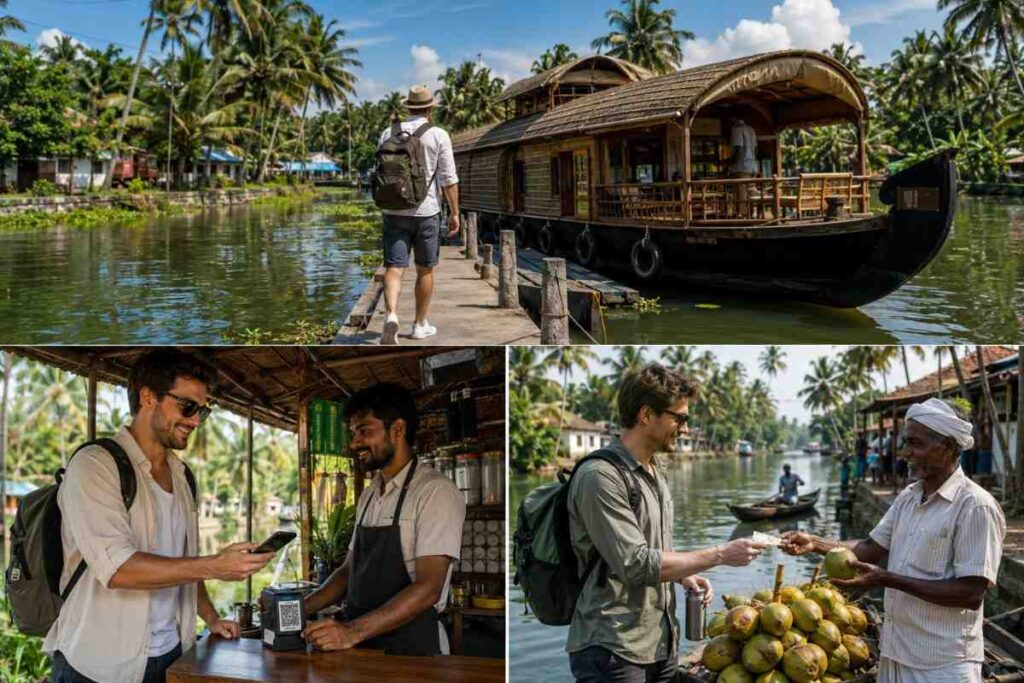
Alleppey town, Kumarakom, and Kochi have broad UPI acceptance. Restaurants, guesthouses, local shops, auto-rickshaws, and most market traders in these towns display QR codes and expect digital payments. The same is true for tour operators and houseboat booking agents based in town. UPI has become the default for most above-ground commerce in Kerala’s tourist centers.
Where cash is still essential
On the water, cash is still the reality. Houseboat crew tips, village vendor purchases during canoe rides, small ferry tickets, and roadside stalls along rural backwater routes are cash-only. The further you move from the main town centers into the canal network, the less likely any vendor is to have a QR code. Carry Rs 5,000 to Rs 10,000 (approx $53 to $106) in small notes for on-water and village spending. ATMs are available in Alleppey town and Kottayam but become increasingly scarce in backwater villages, so withdraw before boarding.
How CheqUPI helps foreign tourists
CheqUPI is an RBI-licensed prepaid payment instrument built specifically for foreign tourists and NRIs. You load it using your international credit or debit card, receive a UPI ID, and pay at any QR-code merchant in India by scanning, exactly as every local does. In the Kerala backwaters region, that covers the majority of your town-based spending: restaurants in Alleppey, guesthouses in Kumarakom, auto-rickshaws, local transport, and market shopping.
The loading fee is 2.95% + applicable taxes for all foreign users. Every merchant payment after that costs zero. CheqUPI is free to join for tourists from 180+ FATF-compliant countries. For a full guide on how UPI works for foreign tourists in India, see our complete UPI guide.
Kerala backwaters travel tips for foreign tourists
Board your houseboat by noon. Cruising stops at 5:30 PM, and late arrivals lose the best hours on the water.
One night on a houseboat is usually enough. Two-night cruises cover the same routes and get repetitive. Pair one houseboat night with one night at a guesthouse or homestay along the canals for a more varied experience.
Always request a quieter route. Tell your operator you want the village canals rather than the main Punnamada or Vembanad Lake loop. The scenic difference is significant, and the cost is identical.
Carry mosquito repellent. After sunset on the water, mosquitoes arrive in numbers. Most houseboats provide coils, but bringing your own spray is worth it for comfort on deck.
Always choose Indian rupees at ATMs and card terminals. Dynamic Currency Conversion, where a machine offers to charge you in your home currency, gives a significantly worse rate. Always select INR.
Keep Rs 5,000 to Rs 10,000 in small notes for on-water tips, village purchases, and small ferry tickets where no QR code exists.
Conclusion
The Kerala backwaters reward tourists who arrive with some preparation and honest expectations. Choose your region based on what kind of experience you want, not just what the brochure shows. Pick a houseboat by crew quality and food, not exterior finish. Sort your payments before you arrive so that Alleppey town and Kumarakom are fully accessible with a UPI wallet, and carry enough cash to handle the on-water reality. Done right, this is one of the most genuinely memorable travel experiences in Asia.
FAQs
What is the best time to visit the Kerala backwaters?
November to February. Cool temperatures, clear skies, and full houseboat availability make this the best window for foreign tourists. December and January are peak seasons with higher prices.
How much does an Alleppey houseboat cost for foreign tourists?
Budget houseboats start at Rs 6,000 to Rs 8,000 (approx $64 to $85) per night for two people. Premium options run Rs 12,000 to Rs 25,000 (approx. $127 to $265) and above. Prices include meals and crew in most packages.
What are the best things to do in the Kerala backwaters?
Overnight houseboat cruise, sunrise village canoe ride, the Kollam to Alleppey public ferry, birdwatching at Kumarakom Bird Sanctuary, and the Nehru Trophy Snake Boat Race in August.
Are the Kerala backwaters safe for foreign tourists?
Yes. The backwaters are one of the safest tourist destinations in India. Book houseboats through Kerala Tourism-certified operators, confirm life jackets are on board, and avoid unlicensed agents.
How do foreign tourists pay in the Kerala backwaters?
Use a UPI wallet like CheqUPI for town spending in Alleppey and Kumarakom. Carry Rs 5,000 to Rs 10,000 cash for on-water tips, village vendors, and ferry tickets where no QR code is available.
How do I get to Alleppey from Kochi?
By road it is 1.5 to 2 hours. A taxi from Kochi airport costs Rs 1,500 to Rs 2,500 (approx $16 to $27). Buses from central Kochi cost Rs 80 to Rs 120 (approx $1 to $1.3) and take around 1.5 hours.
Which is the best region for Kerala backwaters tourism?
Alleppey for first-timers and the widest houseboat choice. Kumarakom for couples and birdwatching. Kollam for the budget public ferry experience. Kasaragod for those wanting to avoid tourist crowds entirely.
Is Kerala tourism cashless for foreign tourists?
In major towns like Alleppey and Kumarakom, UPI QR payments are widely accepted. On the water and in remote villages, cash is still essential. A UPI wallet covers most town-based spending.
How long should I spend in the Kerala backwaters?
Two to three days is enough for most tourists. One night on a houseboat plus one day for village canoe rides, the public ferry, or birdwatching covers the main experiences without repetition.
What is a kettuvallam houseboat?
A kettuvallam is a traditional Kerala rice barge converted into a floating accommodation. The name means “tied boat” in Malayalam, referring to the coir rope construction. Modern versions have bedrooms, bathrooms, a dining area, and a viewing deck.
“Kerala rewards tourists who arrive prepared. The houseboat, the canal towns, the markets, and the restaurants are all waiting. Download CheqUPI, activate your wallet after arriving in India, and start paying with UPI in minutes.”