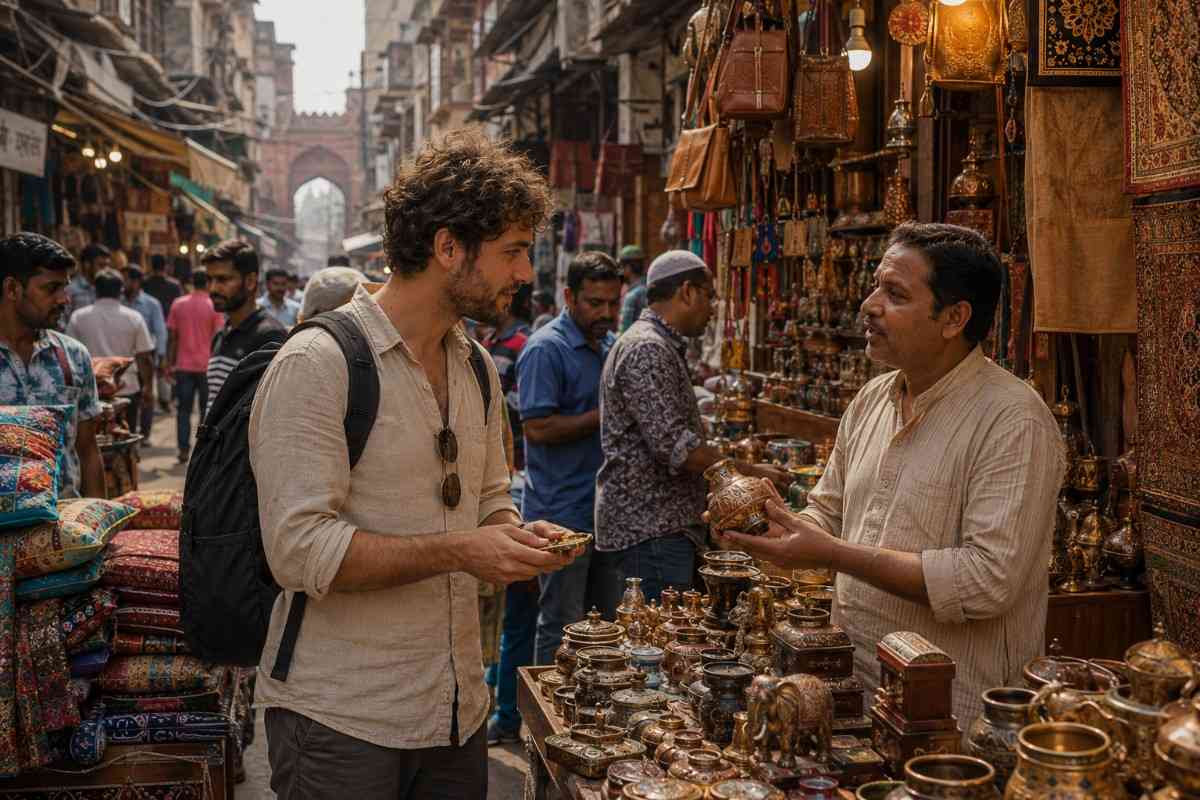
The same souvenir can sell for two completely different prices within minutes, not because it’s different, but because the conversation is. In many Indian markets, bargaining is part of the buying process, and tourists who understand the unwritten rules often walk away with a better deal than those who accept the first price they hear.
A little local knowledge goes a long way. Knowing where to negotiate, how much to offer, and how to pay once you’ve agreed on a price makes shopping in India far easier and far more enjoyable.
Key highlights
- Bargaining is standard practice in bazaars, street stalls, and souvenir markets across India.
- Fixed-price stores, malls, restaurants, and hotels do not expect negotiation.
- A common starting offer is roughly half of the vendor’s first quoted price.
- Many vendors now accept UPI QR payments alongside cash for market purchases.
- CheqUPI is free to join for all eligible nationalities, with a loading fee of 2.95% + taxes and a 0% merchant payment fee.
- Foreign tourists should carry roughly Rs 5,000 to 10,000 (approx $52 to $104) in cash for a market day.
- Some vendors refuse older-series or damaged banknotes, so check your notes before heading out.
- Foreign card ATM withdrawals typically add a 1% to 3% fee plus a fixed charge of Rs 200 to Rs 335 (approx $2 to $3.5).
Where bargaining is expected in India
Bargaining is the norm in local bazaars, handicraft markets, souvenir shops, and street stalls across most Indian cities. Vendors in these settings usually quote a higher opening price, expecting the buyer to negotiate down. Independent transport operators, like unmetered auto-rickshaws, also fall into this negotiable category.
Markets like Jaipur’s Johari Bazaar, Delhi’s Chandni Chowk, and Mumbai’s Colaba Causeway all run this way. Treat the first price you hear as a starting point rather than the final one. This applies to clothing, jewelry, spices, and most handmade goods sold outside formal retail stores.
Where bargaining does not belong
Fixed-price zones include malls, branded retail stores, restaurants, hotels, and monument entry tickets. Attempting to negotiate in these settings usually creates confusion rather than savings. State-run handicraft emporiums also operate on fixed pricing, which makes them useful for checking a fair baseline price.
Bus and train tickets fall into this same fixed category and should never be haggled over. Recognizing these boundaries helps you avoid awkward interactions and shows respect for the local system. When in doubt, ask a hotel staff member whether a place expects bargaining before you try it.
How to bargain politely and effectively
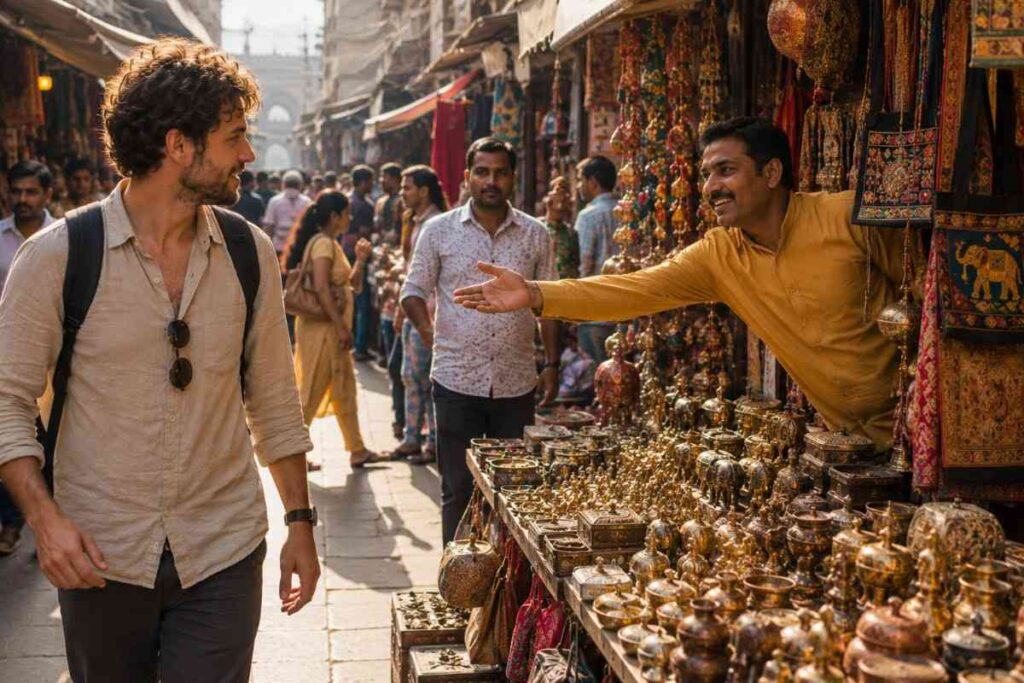
Start by asking the price, then offer roughly half of what the vendor quotes as your opening counter. Keep the tone friendly rather than confrontational, since bargaining in India is treated as a social exchange. Smiling and light conversation often move the negotiation along faster than a hard stance.
Walking away is one of the most effective tactics available to a buyer. Vendors frequently call out a lower price the moment you turn to leave. Comparing prices at two or three stalls before committing also gives you a realistic sense of what an item is actually worth.
Common bargaining mistakes tourists make
The most common mistake is accepting the first quoted price without any counter-offer at all. This happens often in tourist-heavy areas where vendors expect visitors to pay significantly more than locals. Another frequent error is over-haggling to the point of aggression, which can sour an otherwise pleasant exchange.
Showing too much visible excitement over an item also works against you at the negotiating table. Vendors read enthusiasm as a signal to hold firm on price. A calm, mildly indifferent tone tends to bring the number down faster than visible eagerness.
How to pay once you’ve agreed on a price
Most bazaar stalls and street vendors still run primarily on cash, though larger stores increasingly accept UPI QR payments too. If you’re unsure which payment method works best while traveling in India, read our guide on Cash, Card, or QR: How to Pay in India as a Tourist.
Once you agree on a price, confirm upfront whether the vendor takes a QR payment or expects cash only. Some vendors may refuse banknotes that are torn, heavily soiled, or otherwise damaged, so carry clean, good-condition notes if you plan to pay with cash.
Carrying a UPI wallet alongside cash covers both scenarios without slowing down the purchase. Learn how to set up a UPI wallet as a foreign tourist before your trip, then complete activation after arriving in India. This combination works well across most bazaars, from spice markets to jewelry stalls.
Budgeting for a day of market shopping
A single market day can involve several small purchases, so it helps to set a rough spending cap before you start. Comparing prices at a few stalls first also protects your budget from one inflated early quote. Keep a mental running total as you negotiate across multiple items.
Bargaining well can save a meaningful share of what you would otherwise spend on souvenirs and clothing. Set a rough spending ceiling before you start shopping so one inflated early quote does not throw off your day. This also helps you judge whether a final price is genuinely fair.
Staying safe while shopping in Indian markets
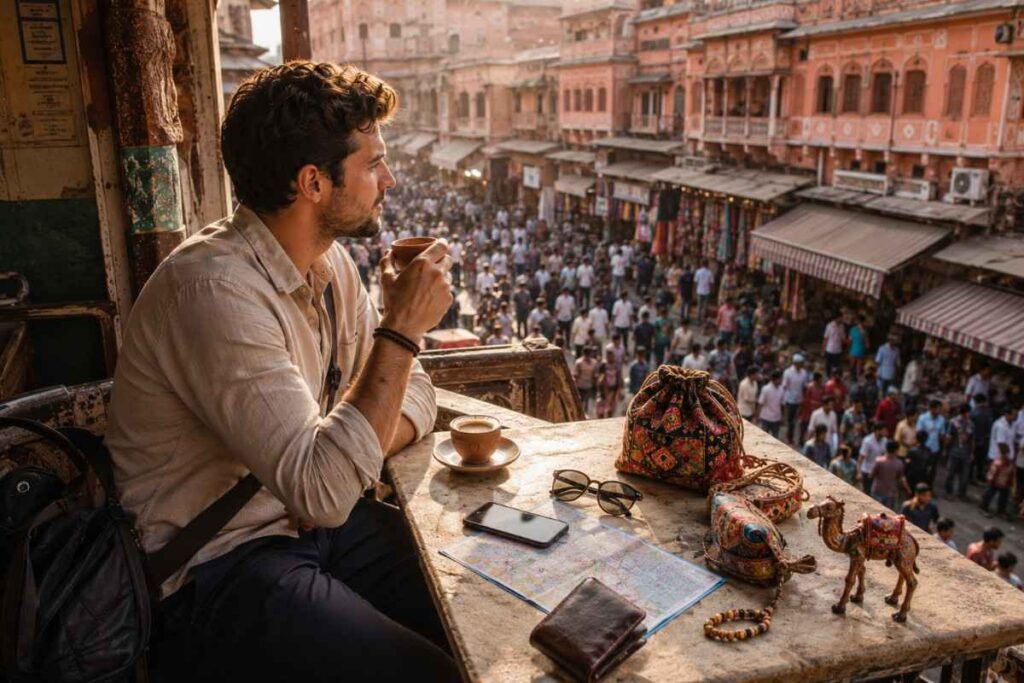
Keep both cash and a card or wallet on hand, since not every stall accepts the same payment method. Avoid flashing large amounts of cash while negotiating, particularly in crowded tourist-heavy markets. Stick to well-lit, busier lanes when shopping later in the evening.
Foreign card ATM withdrawals in India typically carry a network markup of 1% to 2%, plus your bank’s own fixed fee. Keeping a UPI wallet loaded alongside your cash reduces how often you need to rely on an ATM at all. A little caution keeps a good shopping day from turning into a stressful one.
Conclusion
Bargaining in India rewards a calm, friendly approach far more than an aggressive one. Know which settings expect negotiation and which run on fixed prices, and carry both cash and a working payment method for whichever stall you land at. A little preparation turns a stressful haggling session into an easy win.
FAQs
1. Is bargaining considered rude in India?
No, bargaining is a normal, expected part of shopping in bazaars, street stalls, and souvenir markets across India.
2. How much should I offer as a starting price?
Roughly half of the vendor’s first quoted price is a common and reasonable starting counter-offer.
3. Where should tourists avoid bargaining?
Malls, branded stores, restaurants, hotels, and monument entry tickets all run on fixed prices.
4. Do Indian market vendors accept card or UPI payments?
Many larger stalls now accept UPI QR payments, though smaller vendors may still expect cash only.
5. How much cash should I carry for a market day?
Roughly Rs 5,000 to 10,000 (approx $52 to $104) covers a typical day of bazaar shopping.
6. Why do some vendors refuse certain banknotes?
Vendors often reject older-series, torn, or heavily soiled notes, so check your cash before heading out.
7. How much does an ATM withdrawal cost with a foreign card?
Expect a 1% to 3% fee plus a fixed charge of Rs 200 to Rs 335 (approx $2 to $3.5) per withdrawal.
8. Which Indian markets are best for bargaining?
Chandni Chowk in Delhi, Johari Bazaar in Jaipur, and Colaba Causeway in Mumbai are known bargaining hotspots.
9. Can I bargain with auto-rickshaw drivers?
Yes, independent rickshaw fares are usually negotiable unless the ride uses a metered app.
10. Should I tip after getting a good bargain?
Tipping is not expected after bargaining, since the negotiated price already reflects the final deal.
“Once you’ve agreed on the right price, paying should be the easiest part. Download CheqUPI before your trip, complete activation after arriving in India, and pay UPI merchants with confidence.”