Introduction
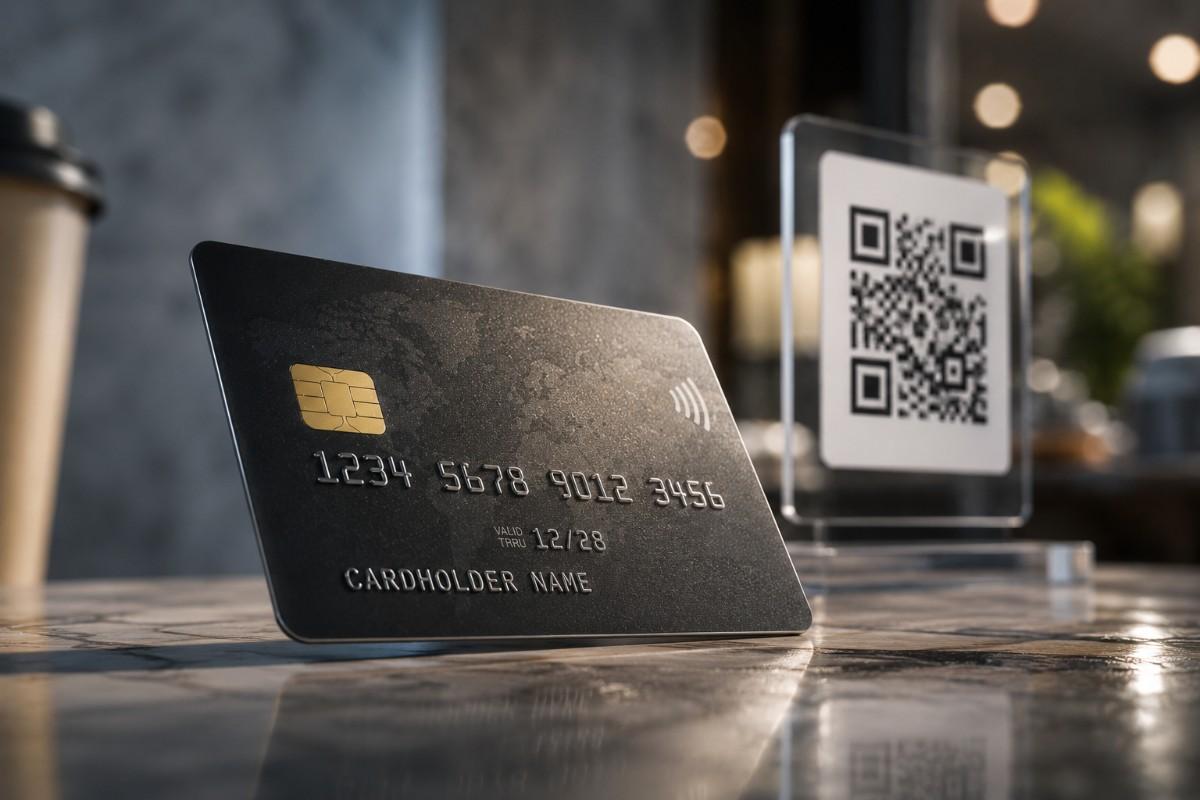
Most travellers arrive in India expecting their Visa or Mastercard to work the way it does everywhere else. You tap, swipe, or scan, and the payment goes through. India works differently. Walk into almost any restaurant, market, auto-rickshaw, or street food stall and you will find a QR code instead of a card machine. Hold your card up to it and nothing happens. Ask for a card terminal, and most vendors will look at you blankly. This is not a glitch. It is how India’s payment system was built, and it catches nearly every first-time visitor off guard.
Your international card fails at Indian QR codes for a specific technical reason, and there is a straightforward fix. This covers what that reason is, what the alternatives actually cost, and how to have payments sorted before you land.
Key highlights
- India has millions of UPI QR codes and far fewer card terminals. QR codes are how the country pays.
- Visa and Mastercard run on a card-based network. UPI runs on a domestic bank-to-bank rail. The two systems have no connection.
- From 2022, only RuPay credit cards can process UPI transactions. Visa and Mastercard are excluded by policy.
- CheqUPI is free to join for all eligible nationalities. The wallet loading fee is 2.95% + applicable taxes for all foreign users. There are no transaction fees when paying merchants through UPI.
- Every merchant payment through CheqUPI costs Rs 0. Zero fee at the point of sale.
- Tourists from 180+ FATF-compliant countries are eligible. No Indian bank account or Indian SIM card needed. An internet connection and location access are required.
What is UPI, and how does it actually work
UPI is India’s instant payment system, run by the National Payments Corporation of India (NPCI). It connects bank accounts directly, moving money from one account to another in seconds when you scan a QR code.
Card machines are expensive for small vendors to install and maintain, so most Indian merchants skipped them entirely. Millions of UPI QR codes are deployed across India, compared to far fewer card terminals. The QR code won because it costs merchants nothing to receive payments through it.
A foreign traveller on a tourist visa cannot open an Indian bank account. Without a bank account, you cannot use a standard UPI app like PhonePe or Google Pay. That is the gap a prepaid UPI wallet fills. You load it from your international card, and it sits natively on the UPI rail, letting you pay any QR code exactly the way a local does. Read our UPI guide for foreign travellers for the full setup process.
The technical reason your card cannot reach UPI
Your Visa or Mastercard fails at Indian QR codes because of how UPI is built, not because of a technical fault on your card.
How Visa and Mastercard actually work
Visa and Mastercard operate on a card-based model. When you pay, your card number is identified, the transaction is routed through their international network, and settlement happens between banks through that network. Every card payment passes through Visa or Mastercard as the intermediary.
How UPI works differently
UPI skips all of that. It uses a Virtual Payment Address linked directly to an Indian bank account. When you scan a QR code in India, the payment moves bank-to-bank on a domestic rail managed by NPCI. There is no step in this process where a Visa or Mastercard network is needed or involved.
Why the two systems never meet
When a merchant shows you a UPI QR code, that code encodes a UPI ID linked to an Indian bank account. Your Visa card has no path to reach that ID. The code cannot be read by your card network because the two systems operate on completely separate rails. This is not a compatibility issue that software can fix. It is a structural difference in how the two payment systems were designed.
In 2022, the Indian government gave RuPay exclusive rights to process credit card transactions through UPI. RuPay is India’s domestic card network, run by NPCI. This policy locked Visa and Mastercard out of UPI credit card transactions entirely. So even Indian residents with Visa or Mastercard credit cards cannot use them on UPI. For a foreign traveller, the exclusion runs even deeper because you do not hold any Indian bank account at all.
What happens when you try anyway
Most tourists try three workarounds before giving up. All three fail for different reasons.
Scanning the QR code with your home banking app
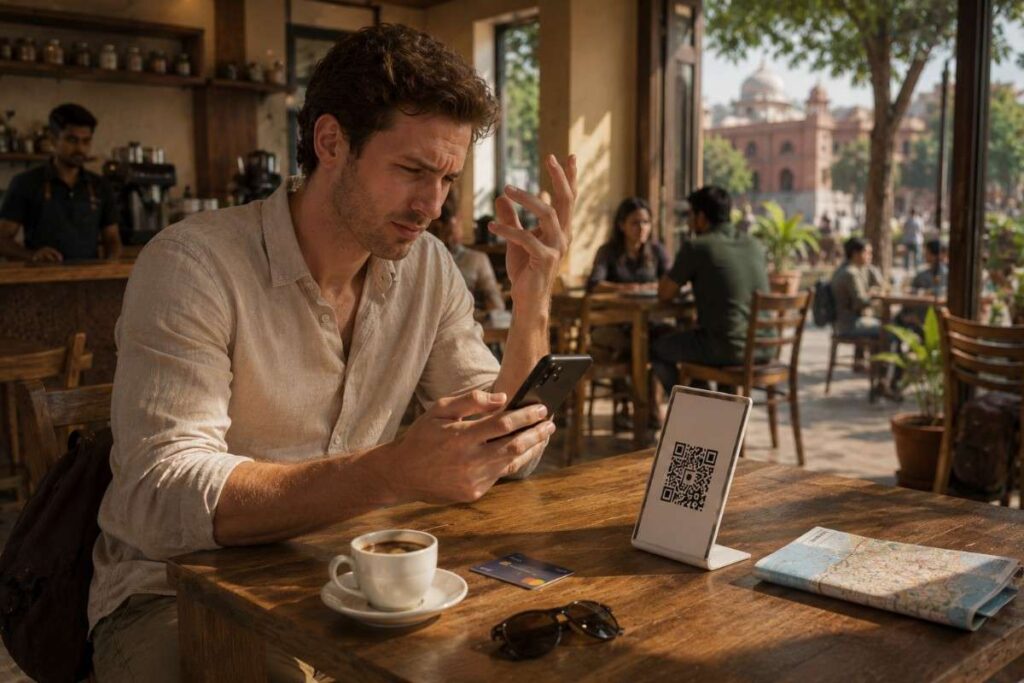
Your home bank’s app is not on the UPI rail. The QR code at an Indian merchant encodes a UPI ID linked to an Indian bank account. Your banking app cannot read or route to that. The scan either fails entirely or returns an error.
Trying Google Pay or PhonePe
Google Pay and PhonePe both require an Indian bank account to function on UPI. There is no option to link a foreign card directly to either app. You can download them but you cannot use them to pay at an Indian merchant without an Indian bank account behind them.
Looking for a card terminal instead
India has far fewer card terminals than QR codes. Most small restaurants, markets, street stalls, auto-rickshaws, and local vendors do not have a terminal. Even where terminals exist, many vendors do not switch them on. You cannot rely on card tap as a fallback across most of India.
What does it cost when you fall back on alternatives
Without UPI access, most travellers fall back on ATMs, airport money changers, or card swipes where terminals exist. All three cost more than most people expect.
| Payment method | Upfront cost | Per-transaction or conversion fee | Merchant payment fee |
| CheqUPI prepaid wallet | Free for all eligible nationalities. | 2.95% + applicable taxes for all foreign users. | 0% |
| Airport money changer | None | 8% to 9% per conversion | N/A |
| ATM withdrawal in India | None | Rs 200 to 500 fixed fee plus bank markup | N/A |
| International card swipe | None | 1% to 4% bank markup | Dynamic currency conversion risk |
Note: Fees above are based on current published rates at the time of writing. Airport money changer rates are indicative and vary by location and operator. ATM fees vary by your home bank. Always check for the latest rates before you travel.
On a trip where you load $500 in rupees, an airport money changer at 8% to 9% costs you $40 to $45 before you have bought a single thing. CheqUPI charges 2.95% plus tax on the same amount, with zero fees at every merchant after that. For a full breakdown of what your India trip is likely to cost, read our India travel budget guide.
The fix: a prepaid UPI wallet puts your card on the rail
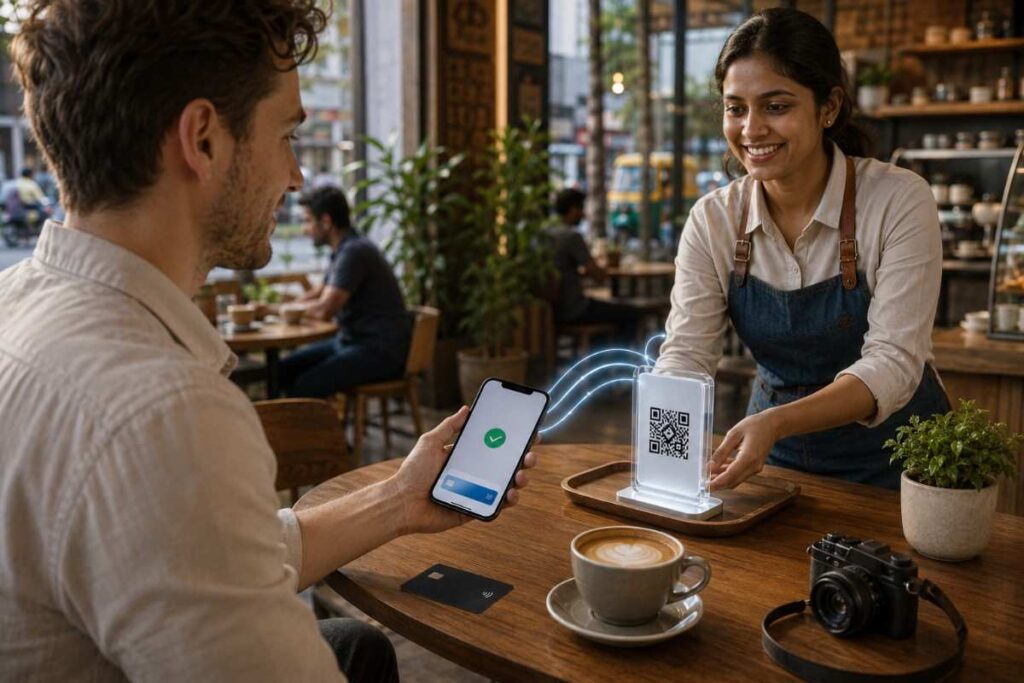
A Prepaid Payment Instrument (PPI) wallet is the RBI-approved solution for foreign travellers. You load Indian rupees into the wallet using your international Visa or Mastercard. The wallet connects natively to the UPI network. From that point, every QR code in India that accepts UPI accepts your payment, exactly the way a local pays.
CheqUPI is an RBI-licensed prepaid wallet built by Terrafin Solutions Private Limited for this exact situation. It is backed by Y Combinator (W22) and operates under Transcorp International’s PPI and AD Cat-II licence through the UPI One World network. It connects directly to the same payment rails every merchant in India already uses. No separate app for the merchant. No card terminal needed. They show you their QR code and you pay.
One rule to know before you pay: CheqUPI is for paying registered merchants (P2M). P2P transfers are not supported under RBI regulations. For the vast majority of spending across India, merchant QR codes are all you need. After you arrive in India, a quick verification step activates your wallet in 5 to 10 minutes. Check CheqUPI for current locations and coverage.
What does it cost to use CheqUPI
| Cost | Detail |
| Joining fee | Free for all eligible nationalities. |
| Loading fee | 2.95% + applicable taxes for all foreign users. |
| Merchant payment fee | 0% at every merchant |
| Currency conversion | Your own bank handles this. CheqUPI charges no forex markup. |
Note: Fees above are based on CheqUPI’s published rates at the time of writing. Figures may change. Always check for the latest rates before you travel.
Cooling off period (the 1st 24 hours) starts from the 1st transaction (not from activation).
Spending limits that apply
| Limit type | Amount (INR) | Amount (USD approx) |
| Per transaction | Rs 1,00,000 | $1,060 |
| Daily spending cap | Rs 1,00,000 | $1,060 |
| Monthly spending cap | Rs 3,00,000 | $3,170 |
| Maximum outstanding balance | Rs 2,00,000 | $2,120 |
| Daily transaction count | 10 transactions | N/A |
| New user cap, first 24h | Rs 50,000 and 5 transactions | $530 |
Note: These limits are set under RBI guidelines for prepaid wallets issued to foreign travellers. The new user cap of Rs 50,000 and 5 transactions applies for the first 24 hours on both Android and iOS. Always check CheqUPI,for the most current figures before you travel.
Note: Cooling off period (the 1st 24 hours) starts from the 1st transaction (not from activation).
Who can use CheqUPI
Tourists from 180+ FATF-compliant countries can use CheqUPI. FATF is the Financial Action Task Force, an international body that flags countries with weak anti-money laundering controls. Countries on its blacklist or greylist cannot access the service.
Eligibility is far wider than G20 nations alone. Visitors from Vietnam, South Korea, Argentina, Thailand, Indonesia, and dozens more are all eligible. Check CheqUPI to confirm your country’s eligibility before you travel. For general travel safety in India, read our India safety guide for tourists.
Conclusion
Your Visa or Mastercard fails at Indian QR codes because UPI is a domestic bank-to-bank system that international card networks were never built to reach. The 2022 policy giving RuPay exclusive UPI credit card access locked foreign cards out at a structural level. A prepaid UPI wallet is the fix. CheqUPI, built by Terrafin Solutions Private Limited and licensed by Transcorp International under RBI regulations, loads your international card onto the UPI rail.
CheqUPI is free to join for all eligible nationalities.The loading fee is 2.95% + applicable taxes for all foreign users, and Rs 0 at every merchant across 55 million+ locations. Set it up before your flight, and the QR code problem disappears the moment you land.
Frequently asked questions
Why does my Visa card not work with QR codes in India?
UPI QR codes connect to Indian bank accounts on a domestic payment rail. Visa has no technical connection to that system. Your card cannot route to a UPI ID without a prepaid wallet sitting between them.
Can I use Google Pay or PhonePe in India as a tourist?
No. Both apps require an Indian bank account to access UPI. No Indian bank account means no UPI access through these apps. A dedicated prepaid wallet like CheqUPI is the correct solution for foreign travellers.
What is RuPay, and why can it use UPI but Visa cannot?
RuPay is India’s domestic card network, run by NPCI. From 2022, only RuPay credit cards can link to UPI for transactions. Visa and Mastercard were excluded by government policy, not just technical differences.
Is there any way to use my international card for UPI payments?
Yes. Load your international Visa or Mastercard into a prepaid UPI wallet like CheqUPI. The wallet connects natively to the UPI rail and lets you scan and pay at any registered merchant across India.
What does CheqUPI cost to use?
CheqUPI is free to join for all eligible nationalities.The loading fee is 2.95% + applicable taxes for all foreign users. Every merchant payment costs Rs 0.
Can a tourist use UPI in India without an Indian bank account?
Yes. CheqUPI is a prepaid wallet that links your international card to UPI. No Indian bank account, Indian SIM card, or local address is needed to register or make payments. An internet connection and location access are required.
Which countries can use CheqUPI in India?
Tourists from 180+ FATF-compliant countries are eligible. Citizens of FATF blacklisted or greylisted countries, including Pakistan and Myanmar, etc. cannot access the service. Check CheqUPI to confirm your eligibility.
Do I need an Indian SIM card to use CheqUPI?
No. You do not need an Indian SIM card. Your home SIM works for the OTP verification during registration. An internet connection and location access are required to use the app.
What is the daily spending limit on a CheqUPI wallet?
The daily spending cap is Rs 1,00,000 (approx $1,060). You can make up to 10 transactions per day. For your first 24 hours after the first transaction, a temporary cap of Rs 50,000 and 5 transactions applies on both Android and iOS.
What happens to my CheqUPI wallet when my India visa expires?
Any unused wallet balance can be refunded at any time as per request to your international card upon account closure or visa expiry.
“Understanding why your card fails is step one. Step two is setting up the wallet that fixes it before you board. Read our complete UPI guide for foreign travellers and get sorted before you land.
Download CheqUPI. Activate your wallet after arriving in India and start paying with UPI in minutes.”